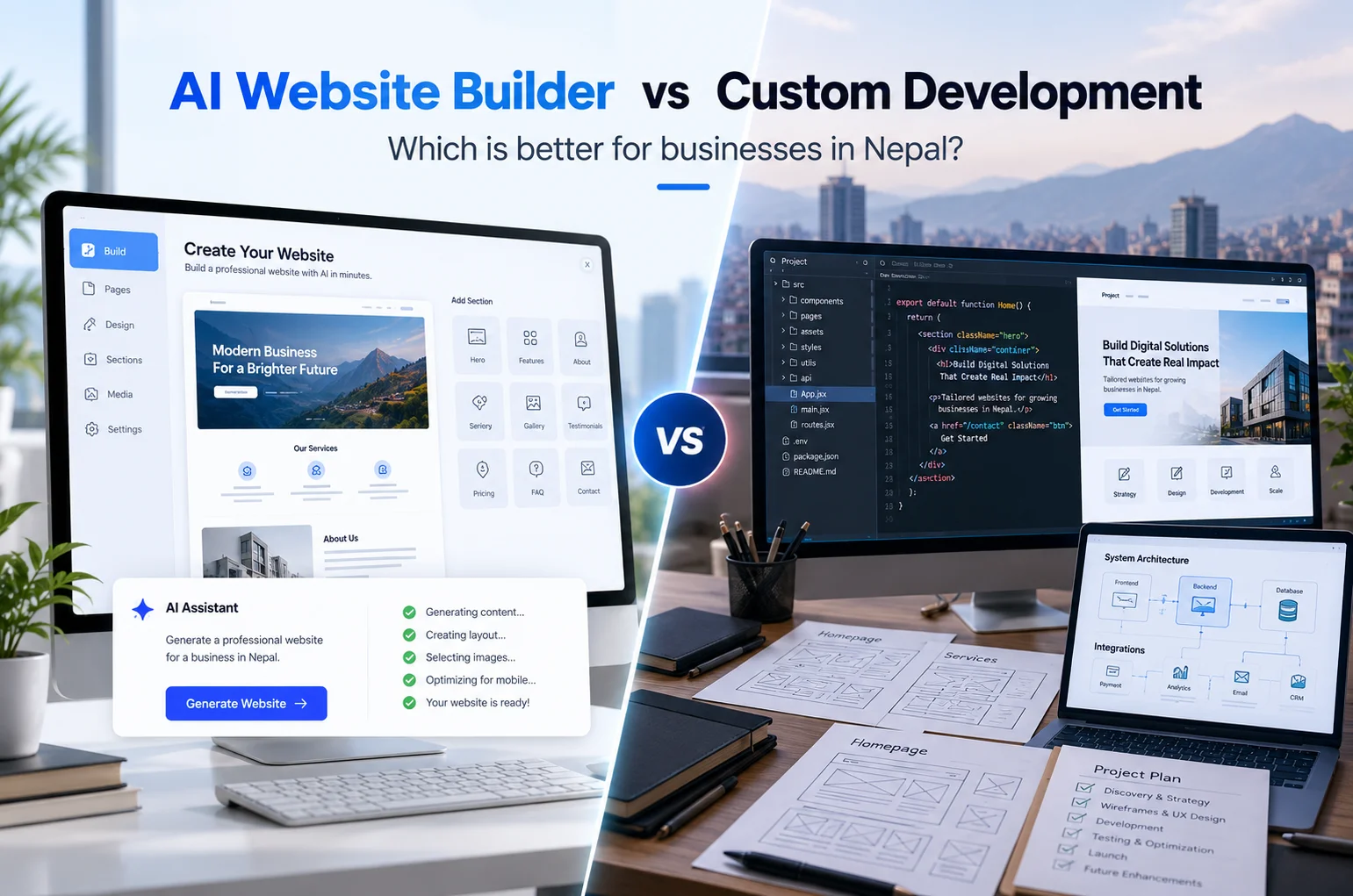
AI Website Builder vs Custom Website Development in Nepal: Which Is Better?

AI can now create a basic website in minutes. Enter your business name, describe what you do, choose a style, and an AI website builder can generate pages, text, images, layouts, and contact forms with surprisingly little effort.

That sounds attractive, especially for a startup or small business trying to reduce costs.

But getting a website online and building a website that supports a real business are not always the same thing.

For some businesses in Nepal, an AI website builder may be perfectly adequate. For others, particularly companies that depend on search traffic, enquiries, ecommerce, integrations, custom functionality, or future expansion, professional website development can offer much more flexibility.

The right decision depends on what the website needs to accomplish.

This guide compares AI website builders vs custom website development across cost, speed, design, SEO, performance, ownership, integrations, security, scalability, and long-term business value.

What Is an AI Website Builder?

An AI website builder is a platform that uses artificial intelligence to help create websites with minimal manual design or development work.

Instead of starting with an empty page, you usually answer questions about your business, industry, preferred style, and required pages.

The platform may then generate:

  • A homepage layout
  • Service pages
  • About and contact pages
  • Written content
  • Images
  • Colour combinations
  • Navigation
  • Forms
  • Calls to action
  • Basic SEO settings

Tools from companies such as Wix, Squarespace, Hostinger, and other website platforms increasingly include AI-assisted website creation.

You can then edit the generated website through a visual editor rather than writing code.

That makes AI builders particularly attractive to people who want to create something quickly without hiring a designer or developer.

What Is Custom Website Development?

Custom website development starts with the needs of the business rather than the limitations of a predefined website generator.

A web design and development team in Nepal typically considers the following factors:

  • Your business goals
  • Customers and target market
  • Website structure
  • User journeys
  • Branding
  • Content
  • Required functionality
  • Search visibility
  • Mobile experience
  • Integrations
  • Security
  • Future expansion

The website may be developed using platforms such as WordPress or WooCommerce, or frameworks and technologies such as Laravel, React, Next.js, Node.js, or a custom content management system.

“Custom” does not always mean every line of code has to be created from scratch.

It means the solution is selected and configured around the requirements of the project instead of forcing the business into a fixed website template.

AI Website Builder vs Custom Website Development: Quick Comparison

Factor AI Website Builder Custom Website Development
Initial cost Usually lower Usually higher
Setup speed Very fast Takes more planning and development
Technical knowledge Little required Development handled by professionals
Design flexibility Limited by the platform Much greater flexibility
Unique branding Moderate High
Custom functionality Limited to supported features Can be built around business needs
SEO control Suitable for basic SEO Greater technical and structural control
Integrations Platform dependent Much more flexible
Scalability Can become restrictive Can be planned for growth
Maintenance Mostly platform managed Depends on the technology and support plan
Ownership/control Platform dependent Usually greater control
Best for Simple sites and testing ideas Businesses with long-term digital goals

Neither option wins every category.

The question is which limitations you are willing to accept.

Where AI Website Builders Work Well

AI website builders have improved considerably.

They can be a sensible choice when your requirements are straightforward.

1. You Need a Website Quickly

If you need a simple online presence for an event, temporary project, personal portfolio, or newly tested business idea, speed may matter more than advanced functionality.

An AI builder can create a usable starting point much faster than a traditional design and development process.

2. Your Budget Is Very Limited

A new business may not be ready to invest in a professionally developed website.

Using an AI builder can provide a low-cost way to establish an initial online presence while the business validates its idea.

3. Your Website Is Simple

Suppose your website only needs:

  • Home
  • About
  • Services
  • Contact
  • A basic enquiry form

An AI builder may handle those requirements reasonably well.

There is little benefit in overengineering a website that genuinely only needs a few straightforward pages.

4. You Want to Manage Everything Yourself

Many AI website platforms are designed for nontechnical users.

Changing text, replacing photos, creating a new page, or updating contact details can often be done visually.

For owners who want complete day-to-day control without depending on a developer for small changes, that simplicity can be useful.

Where AI Website Builders Start to Become Restrictive

The limitations usually become clearer when the website has to do more than present basic information.

Customisation Is Limited by the Platform

An AI builder may generate a polished design, but you are still working inside the system provided by that platform.

You can change many things, but not necessarily everything.

If your business later needs an unusual customer journey, custom database, specialised booking process, quotation system, customer portal, or integration, you may discover that the builder cannot support it cleanly.

Your Website Can Look Generic

AI tools create designs using established layout patterns because those patterns work across many industries.

That is convenient, but it can also make websites look similar.

For businesses competing on reputation, trust, premium positioning, or brand identity, a recognisable design may be more important than simply having an attractive template.

Integrations Can Become Difficult

Businesses rarely operate using only a website.

A growing company may need to connect the site with:

  • Customer relationship management software
  • Accounting systems
  • Booking software
  • Inventory systems
  • Email marketing tools
  • Payment gateways
  • Internal business applications
  • APIs
  • Customer databases

Some AI builders provide integrations through apps or plugins.

The problem appears when the integration you need is not supported or does not work in the way your business operates.

Custom development provides more options for connecting systems where suitable APIs or technical access are available.

Why Custom Website Development Makes Sense for Growing Businesses

Custom development costs more because more planning, design, technical work, testing, and quality control are involved.

But businesses are not paying only for more code.

They are paying for greater control over how the website supports the business.

1. The Website Can Be Planned Around Your Customers

A professional website project usually starts before visual design.

For example, imagine a trekking company in Nepal.

Visitors may arrive looking for:

  • Trek packages
  • Difficulty levels
  • Best travel seasons
  • Itineraries
  • Prices
  • Accommodation details
  • Permits
  • Enquiries
  • Custom trips

A generic template might simply list all services.

A properly planned website can organise this information around how travellers actually compare and choose trekking packages.

The difference is not just visual.

It changes how easily a potential customer can make a decision.

2. You Get Greater Design Freedom

A custom website can reflect the personality and positioning of the company rather than adapting the company to a theme.

Designers can make decisions around:

  • Typography
  • Brand colours
  • Page hierarchy
  • Interactive elements
  • Mobile layouts
  • Visual storytelling
  • Calls to action
  • Forms
  • Navigation
  • Content presentation

This matters most where the website contributes directly to perceived credibility.

Banks, healthcare organisations, educational institutions, hotels, professional service firms, manufacturers, NGOs, and established companies often need more control over how their brand appears online.

3. Custom Functionality Can Support Real Business Processes

This is often the strongest reason to move beyond an AI website builder.

A website may need to:

  • Generate quotations
  • Accept bookings
  • Process applications
  • Sell products
  • Manage members
  • Provide customer accounts
  • Search large databases
  • Display property listings
  • Connect to inventory
  • Publish large volumes of content
  • Support multiple branches
  • Handle subscriptions
  • Integrate payment systems
  • Connect with internal software

At that point, the website is becoming part of the company’s operational infrastructure.

Building around those requirements normally makes more sense than continuously adding workarounds to a limited platform.

What About SEO? Does Google Prefer Custom Websites?

No.

Google does not rank a website simply because it was custom coded, nor does it automatically penalise a website because AI helped create it.

Google says its systems focus on whether content is useful, original, reliable, accurate, and created primarily to help people. Using generative AI by itself does not provide a ranking advantage or disadvantage.

The same principle applies to websites.

A poorly planned custom website can perform badly in search.

A well-built website created through a website builder can perform well.

What matters is what the final site provides.

For SEO, important factors include:

  • Crawlable pages
  • Logical website architecture
  • Useful content
  • Clear titles and headings
  • Internal linking
  • Mobile usability
  • Page performance
  • Image optimisation
  • Structured data where relevant
  • Correct canonicalisation
  • Indexability
  • Helpful user experience

Google’s current guidance for generative AI experiences also continues to emphasise foundational SEO and unique, useful, noncommodity content rather than special “AI optimisation” tricks.

So the real SEO question is not:

Was this website created with AI?

It is:

Does the platform give you enough control to build and maintain a strong website?

AI Generated Content Still Needs Human Review

One area where AI website builders require particular attention is content.

An AI tool can quickly produce:

  • Service descriptions
  • Headlines
  • FAQs
  • Calls to action
  • About page copy

That can save time.

But publishing generated content without checking it can create problems.

AI generated text may be:

  • Too generic
  • Similar to competitor content
  • Incorrect
  • Overconfident
  • Repetitive
  • Poorly matched to your customers
  • Missing important local context
  • Filled with claims the business cannot support

Google specifically recommends focusing on accuracy, quality, relevance, and original value when using generative AI for content.

AI can help with the process.

It should not replace knowledge of your own business.

What About AI Search, AEO and GEO?

Businesses are increasingly thinking beyond traditional Google results.

People now use AI-powered search and assistants to research products, services, companies, and questions.

This has led to terms such as AEO, or Answer Engine Optimization, and GEO, or Generative Engine Optimization.

You may see claims that a particular website technology automatically makes a business more visible to AI systems.

That is too simplistic.

Google’s 2026 guidance on generative AI search says the foundations remain familiar: create technically accessible websites and publish useful, original content that provides real value.

Clear information can help search and AI systems understand:

  • What your company does
  • Where you operate
  • Which services you provide
  • Who those services are for
  • Why your company is credible
  • How customers can contact you

A custom website can give you more freedom to structure this information properly, but simply having a custom website does not guarantee visibility.

Content quality and business credibility still matter.

Which Option Gives You Better Website Performance?

There is no universal winner.

Some hosted website builders have highly optimised infrastructure.

Some custom websites are extremely fast.

Others are slow because they contain oversized images, unnecessary scripts, poorly configured plugins, excessive tracking tools, or inefficient code.

Performance depends on implementation.

Custom development can provide greater control over:

  • Code
  • Hosting
  • Caching
  • Image delivery
  • Scripts
  • Databases
  • Third-party resources

But that control is only valuable when used properly.

When comparing options, ask developers or platform providers how they handle performance rather than assuming that one technology is automatically faster.

What About Website Ownership?

This is an important issue that businesses sometimes overlook.

With many hosted website builders, the website operates inside the provider’s ecosystem.

You may own your domain, content, branding, and uploaded materials, but moving the exact website to another platform may not be simple.

If you later decide to leave, you might have to rebuild parts or all of the site elsewhere.

A custom website can often provide greater portability and technical control, particularly when it is built using widely supported technologies and the client receives appropriate access.

Before starting any website project, clarify:

  • Who owns the domain?
  • Who controls hosting?
  • Who controls the CMS?
  • Who has administrator access?
  • Can the website be migrated?
  • Who owns custom code and design files?
  • Are there proprietary dependencies?
  • What happens if you change providers?

These questions matter regardless of whether you use AI or a web development company.

AI Website Builder vs Custom Development Cost in Nepal

AI builders usually win on initial price.

You may only need to pay a monthly or annual platform subscription, depending on the service and plan.

Custom development requires a larger upfront investment because it involves human planning, design, development, testing, and project management.

For some local context, Webtech Nepal’s published 2026 pricing currently lists starter websites from NPR 25,000 to NPR 60,000, while its business website packages are listed from NPR 75,000 to NPR 150,000. More advanced ecommerce and custom development can cost significantly more depending on requirements.

Prices can change, so these figures should be checked before budgeting.

The cheapest option is not necessarily the least expensive over several years.

Consider the total cost of:

  • Platform subscriptions
  • Premium plugins or applications
  • Transaction fees
  • Developer assistance
  • Hosting
  • Maintenance
  • Redesigns
  • Integrations
  • SEO work
  • Rebuilding the site if you outgrow the platform

If you expect to replace an inexpensive website after twelve months because it cannot support the business, the initial saving may disappear.

On the other hand, paying for a large custom solution when your business only needs five simple pages is unnecessary.

Match the investment to the problem.

When Should You Choose an AI Website Builder?

An AI website builder can be a sensible choice when:

  1. You are testing a new business idea.
  2. You need a simple website immediately.
  3. Your budget is very limited.
  4. You only need a few informational pages.
  5. You do not require specialised integrations.
  6. Your website is not central to your sales process.
  7. You are comfortable working within platform limitations.
  8. You expect the site to remain relatively simple.

For example, a freelance consultant who mainly receives referrals and only needs a short profile, list of services, and contact form may not require custom development initially.

When Should You Choose Custom Website Development?

Custom development becomes more worthwhile when:

  1. Your website generates leads or sales.
  2. Search visibility is important to customer acquisition.
  3. You need custom workflows or functionality.
  4. You have a strong or established brand.
  5. You need integrations with other software.
  6. Your site contains large amounts of content.
  7. You operate an ecommerce business.
  8. You expect traffic, products, locations, or services to grow.
  9. You need greater technical control.
  10. Your website is part of a larger digital platform.

A large educational institution, ecommerce company, travel business, corporate organisation, news portal, financial service provider, or multi-location business will usually have very different requirements from a one-person startup.

Their websites should not necessarily be built the same way.

Is a Hybrid Approach Better?

Often, yes.

AI website builder vs custom development does not need to be an all-or-nothing argument.

Professional development teams increasingly use AI too.

AI can assist with:

  • Early wireframe ideas
  • Content planning
  • Coding assistance
  • Image concepts
  • Quality checks
  • Content organisation
  • Research
  • Testing
  • Documentation

The difference is that AI becomes a tool within a professional process rather than the process itself.

A developer can use automation to save time while still making deliberate decisions about architecture, design, security, integrations, performance, content, and usability.

For many businesses, this is likely to become the normal approach.

Questions to Ask Before Choosing Either Option

Before deciding how to build your website, answer these questions.

What Should the Website Achieve?

Do you simply need credibility when someone searches your company name?

Or should the website generate enquiries, bookings, applications, subscriptions, or ecommerce sales?

The more responsibility you give the website, the more carefully it should be planned.

What Will You Need in Two Years?

Avoid planning only for launch day.

Think about whether you may later add:

  • New locations
  • More languages
  • Ecommerce
  • Customer accounts
  • Online payments
  • A mobile application
  • CRM integration
  • Hundreds of products
  • Large content libraries

You do not need to build every future feature today.

But you should avoid choosing a platform that makes predictable growth unnecessarily difficult.

How Important Is Organic Search?

If SEO is expected to become a major acquisition channel, check how much control the platform provides over technical SEO, page structure, redirects, metadata, internal linking, structured data, indexing, and content expansion.

Who Will Maintain the Website?

A custom website that nobody can update is not useful.

An AI website that is easy to edit but impossible to extend may create a different problem.

Choose a system that fits both your technical requirements and the people responsible for managing it.

What Happens If You Want to Leave?

Ask this before signing up, not after.

Your website should not become a business dependency you cannot easily control.

Common Mistakes Businesses Make When Choosing a Website Platform

Choosing Only on Price

Price matters, but website requirements should come first.

A cheap solution that cannot perform an essential function is not cheap.

Buying More Technology Than You Need

The opposite problem is equally common.

A small business does not need an enterprise development stack simply because it sounds impressive.

Use the simplest solution that comfortably supports your current and reasonably expected future needs.

Assuming AI Automatically Means Better

AI can speed up website creation.

It cannot automatically understand your market, customers, competitive positioning, internal workflow, or business strategy.

Those still require human decisions.

Assuming Custom Development Automatically Means Better

Custom websites can also fail.

Poor planning, weak design, slow development, bad SEO implementation, unnecessary features, and difficult administration can make a custom project worse than a good website builder.

Evaluate the people and process, not just the technology.

How Webtech Nepal Approaches Website Development

Webtech Nepal develops business websites, ecommerce stores, WordPress websites, web applications, mobile apps, and other digital platforms for organisations in Nepal and international clients.

Our current website development process begins with understanding the business, audience, content, requirements, and goals before moving into website structure, UI design, development, optimisation, testing, and launch.

Depending on the project, our team works with technologies including WordPress, WooCommerce, Laravel, React, Next.js, Node.js, and other appropriate tools.

That means the recommendation does not have to be the same for every client.

A startup that needs a simple website should not receive the same technical solution as an ecommerce company, large publication, or organisation requiring custom software integration.

The platform should fit the business.

Frequently Asked Questions

Is an AI website builder good for a small business in Nepal?

Yes, if the website is simple and the business mainly needs a basic online presence. It can be an economical way to test an idea before investing in a larger website. Businesses expecting ecommerce, advanced SEO, integrations, or significant growth should examine platform limitations carefully.

Can an AI website rank on Google?

Yes. Google does not automatically reject websites or content because AI was involved in creating them. The final website still needs useful content, sound technical SEO, good user experience, and information that genuinely helps visitors.

Is custom website development better for SEO?

Custom development provides more control, which can make advanced SEO implementation easier. However, custom coding alone does not improve rankings. Content quality, technical implementation, authority, relevance, and user experience still matter.

How much does custom website development cost in Nepal?

Costs vary significantly depending on design, features, integrations, content, technology, and project size. Webtech Nepal currently publishes starter website packages from NPR 25,000 to NPR 60,000 and business website packages from NPR 75,000 to NPR 150,000. More complex ecommerce sites and applications require custom estimates.

Can I start with an AI website and move to a custom website later?

Yes, but migration difficulty depends on the platform. Content, images, products, and data may sometimes be transferable, while the design and functionality may need to be rebuilt. Check export and migration options before choosing a platform.

Does Webtech Nepal use AI in website development?

AI can be useful as part of modern design, content, research, and development workflows, but technology should support rather than replace project planning, professional design, development, testing, and human judgment. The most suitable workflow depends on the project.

Conclusion

Choosing between an AI website builder and custom website development comes down to what role the website plays in your business.

If you need a simple online presence, want to test an idea, or have a very limited budget, an AI website builder may be enough.

If the website needs to generate business, support complex functionality, integrate with other systems, strengthen a distinctive brand, grow with the company, or provide greater technical control, custom website development is usually worth considering.

Do not choose custom development simply because it sounds more professional. And do not choose an AI builder simply because it is faster.

Start with the business requirements.

If you are unsure which approach suits your project, Webtech Nepal can review your website goals, required features, future plans, and budget and recommend an appropriate development approach.
Best Digital Marketing Agency in Nepal: How to Choose the Right One in 2026

If you’re searching for the best digital marketing agency in Nepal, this guide will save you time, money, and the frustration of signing with the wrong team. Picking the wrong agency costs more than money. It costs months of wasted ad spend, a website that still doesn’t convert, and the nagging feeling that your competitors are pulling ahead while you wait for results that never come. The good news is that Nepal’s agency market has matured significantly, and there are genuinely strong options for businesses across categories, from Kathmandu-based SMEs to trekking operators targeting international travelers.

This article gives you a vetted shortlist of the top agencies operating in Nepal right now, honest pricing in NPR, real patterns in results across business types, and a practical checklist you can use before signing anything. One company worth knowing from the start is Webtech Nepal, which sits at the intersection of web development and digital marketing, a combination that turns out to be more valuable than most buyers initially realize. More on that shortly.

What separates a great digital marketing agency from a mediocre one

Many agencies in Nepal advertise a full menu of services: SEO, PPC, social media, content, and analytics. The real question is whether they deliver results or just deliverables. An agency that sends you a polished monthly report while your traffic flatlines and your contact form stays quiet is a cost center, not an investment. Before you evaluate any agency on price or personality, get clear on what a strong agency actually does.

The five services that matter for most businesses are technical SEO, paid media (Google Ads and Meta Ads), content production, social media management, and performance analytics with reporting. Each one is a discipline on its own. A “full-service” agency that spreads thin across all five often does none of them well. For businesses with tight budgets, a focused specialist frequently produces better ROI than a generalist handling everything at half-capacity.

What services a full-service digital agency should actually offer

Technical SEO covers site speed, crawlability, structured data, and on-page optimization. Local SEO adds citation management, Google Business Profile optimization, and location-targeted content. PPC management means building and optimizing campaigns, not just setting them live and billing the retainer. Content production and social strategy are separate disciplines: one feeds search intent, the other builds awareness and engagement. Performance analytics ties it all together with clear KPIs, attribution, and reporting that connects spend to outcomes.

When reviewing proposals, ask specifically which of these services are included and which are upsold separately. “Content marketing” that amounts to two blog posts a month is not a content strategy. An agency willing to be specific about scope is already showing you something important about how they operate.

Why Nepal-specific expertise changes everything

A trekking company in Kathmandu is not trying to rank for Nepali-language searches alone. It needs to appear for high-intent English queries typed by travelers in the United States, United Kingdom, and Australia, searches like “best Annapurna trekking company” or “Nepal trekking packages 2026.” An agency applying a generic SEO playbook built for a different market will miss critical elements: the keyword strategy, link-building sources, and content structure for an international audience look completely different from a local Kathmandu business directory campaign.

E-commerce in Nepal adds its own layer of complexity: payment gateway integration, mobile-first optimization for users on lower-bandwidth connections, and an understanding of how Nepali buyers behave online. Agencies that have navigated these specifics before move faster and make fewer expensive mistakes. Experience with Nepal’s market is not a nice-to-have; it directly affects how quickly your campaigns generate returns.

How to choose the best digital marketing agency in Nepal

Before you shortlist any agency, decide what your business actually needs at this moment. A trekking company needs international SEO and a conversion-ready inquiry site. A Kathmandu e-commerce store needs mobile-first performance and a paid media strategy built around Nepal’s buying behavior. A startup needs a foundation before it needs a campaign. Matching your need to the right agency type is the single most important decision in this process.

The sections below group agencies by specialization so you can self-select based on fit, rather than chasing a generic “best” label.

Top digital marketing agencies in Nepal worth considering in 2026

The following is a practical shortlist, not an official ranking. Agencies are grouped by specialization to help you identify the right category for your business needs.

Performance and SEO-focused agencies

Digital Terai (Kathmandu, founded 2018) and Digipal Solutions (Kathmandu, founded 2020) both focus on search performance and paid media, with documented work in Google Ads and organic growth campaigns. JO Marketing (Mahalaxmi, founded 2023) is a newer entrant with a strong emphasis on measurable outcomes and performance marketing. These agencies are solid choices if your primary goal is campaign performance and traffic growth. One practical note: if your website needs rebuilding or structural SEO work, you may need a separate vendor for that, which adds coordination overhead.

Full-service and creative agencies

Lone Tree (Lalitpur), Digital Marketing Nepal (Kathmandu, founded 2020), Makura Creations (Lalitpur, founded 2013), and Chaitanya Design (Narayangarh, founded 2018) all blend branding, content, and social media with varying depths of performance marketing. Makura Creations’s longevity in the market and Chaitanya Design’s presence across Nepal and Australia make them worth evaluating for businesses that prioritize brand presence alongside growth. These agencies suit businesses that want creative direction and marketing execution under one umbrella. Before committing, request case studies specific to performance metrics, creative depth and campaign performance are different capabilities.

Web-integrated agencies that handle both site and marketing

This category is where the most overlooked efficiency gain lives. When your web development team and your marketing team are the same team, the website gets built for SEO and conversion from day one. There’s no back-and-forth between two vendors about why the landing page isn’t converting or why slow site speed is dragging down Quality Scores.

Webtech Nepal operates in this space, combining website development for tourism operators, e-commerce businesses, and SMEs across Nepal with SEO and digital marketing services designed around the same sites they build. For businesses that need both a high-performance website and a marketing engine to drive traffic, that combined approach removes a significant point of friction.

WebX Nepal (Kathmandu, founded 2017) also sits in this category, offering web development alongside digital marketing services. If you need a single accountable partner for both your web presence and your marketing results, this category deserves serious consideration.

Pricing reality: what digital marketing agencies in Nepal charge in 2026

Most businesses in Nepal either underestimate agency costs or overestimate what a low retainer actually buys. The cheapest agency almost never delivers the best ROI, and the most expensive one isn’t automatically the right choice either. What matters is transparent, itemized pricing tied to clear deliverables and KPIs.

Monthly retainer ranges by service type

The ranges below reflect current market rates observed across Nepal’s agency landscape in 2026, based on publicly available agency pricing and market benchmarks. Actual fees vary by agency size, deliverable volume, and campaign complexity.

  • SEO: NPR 15,000, 40,000 for basic local SEO; NPR 40,000, 80,000+ for competitive campaigns targeting high-volume or international keywords
  • PPC management (Google Ads / Meta Ads): NPR 15,000, 75,000 per month, with advertising spend billed separately directly to the platforms
  • Social media management: NPR 10,000, 25,000 for basic posting; NPR 45,000, 80,000+ for video, Reels, multi-platform, and paid-social support
  • Single-channel starting budget (small business): NPR 25,000, 45,000/month in service fees, plus ad spend
  • Combined SEO and social:NPR 45,000, 120,000/month depending on volume and competition

What to watch out for when reviewing proposals

Red flags show up in predictable ways. Agencies that refuse to separate management fees from ad spend are either hiding markup on media or lack the financial transparency you need to track ROI. Vague scope language like “up to 10 posts per month” tells you nothing about content quality, strategy, or posting schedule. Any proposal that skips reporting, KPIs, or performance benchmarks is signaling that accountability isn’t part of the service.

Lock-in contracts with no performance clauses are worth scrutinizing carefully. A confident agency with a strong track record doesn’t need to trap clients. Ask for itemized pricing, a clear breakdown of what’s included at each tier, and confirmation of who specifically will manage your account week to week.

What real results look like for different business types

Numbers without context mislead. The patterns below reflect observed outcomes when agency work is executed well across these business categories, not optimistic projections or cherry-picked outliers. Where timelines are cited, they align with industry benchmarks for SEO traction (typically three to six months for measurable organic gains).

Startups and SMEs: building a pipeline from scratch

A Kathmandu-based SME with a dated website and no organic presence typically sees the clearest gains when a site rebuild and SEO campaign run in parallel rather than sequentially. When the website is built for conversion alongside the campaign, paid traffic converts better because the landing pages are designed for it. Organic traffic from a three-month SEO push starts compounding around month four or five. Contact form submissions increase not because more people are arriving, but because the site now makes it obvious what to do next.

The core insight is straightforward: running marketing campaigns without a solid website foundation is like running water through a leaky pipe, volume doesn’t help if the structure can’t hold it. Building the pipe and the water supply together is the approach that web-integrated agencies like Webtech Nepal take, and it’s a meaningful differentiator for businesses that need both.

Trekking and tourism companies: ranking where international clients search

A trekking operator in Nepal targeting English-speaking travelers from North America and Europe needs content built around high-intent queries, searches like “Everest base camp guided tours,” “best Annapurna trekking company,” or “Nepal 14-day trekking itinerary”, combined with local SEO that validates the business’s physical presence and credibility in Nepal. This is not a single-channel strategy. It’s organic content supported by a strong Google Business Profile, backed by authoritative links from international travel sources and Nepali tourism organizations.

Businesses that execute this combination consistently tend to see inquiry volume and WhatsApp booking requests grow within four to five months, in line with standard timelines for organic SEO to build measurable traction. Seasonality will affect the data, so establishing baseline metrics before peak season matters. For tourism operators, an agency that builds the website and runs the marketing simultaneously ensures that site architecture, booking flows, and SEO structure are aligned from day one, not retrofitted after traffic starts arriving.

A practical checklist for evaluating any agency before you sign

The questions below are the ones most business owners skip in the excitement of a good sales conversation. They’re also the questions that separate agencies capable of delivering real outcomes from ones that are skilled at winning accounts and weak at keeping them.

Six questions every business owner should ask

  1. Can you share a case study with before-and-after traffic and lead numbers?Named clients and specific figures are the standard. Vague claims of “significant growth” are not.
  2. How do you separate your management fee from ad spend?The two should always be listed separately. If they’re not, ask why.
  3. What does your monthly reporting look like and what KPIs do you track?Ask to see a sample report from a current client. If they don’t have one to share, that’s informative.
  4. Do you have experience with businesses in my industry in Nepal?Generic digital marketing experience transfers partially. Nepal-specific industry experience transfers more directly and produces results faster.
  5. What happens to the work if I stop the retainer?Content, ad account data, and website access should belong to you. Confirm this in writing before signing.
  6. Who exactly will manage my account?Ask whether your day-to-day contact is a senior strategist or a junior coordinator. The answer matters significantly for strategy quality.

Green flags and deal-breakers to watch for

Green flags include named client references you can actually contact, transparent line-item pricing, a willingness to start with an audit or discovery phase before pitching a full retainer, and clear ownership of deliverables. Agencies that ask about your business goals before presenting a solution are showing you how they actually work.

Deal-breakers include guaranteed ranking promises (no one can guarantee rankings), proposals with no case studies attached, retainer scope so vague it’s unenforceable, reluctance to discuss ad spend separately from management fees, and any agency that pitches services before understanding what you’re trying to achieve. These aren’t negotiating tactics, they’re structural problems that will show up in your results.

Frequently asked questions about choosing a digital marketing agency in Nepal

How much should a small business in Nepal budget for digital marketing?

A realistic starting point for a single-channel campaign (either SEO or social media management) is NPR 25,000, 45,000 per month in agency fees, plus separate ad spend if you’re running paid campaigns. Combined SEO and social packages typically start around NPR 45,000/month. Going below these ranges usually means getting scaled-back deliverables or junior-level account management.

What’s the difference between an SEO agency and a full-service digital marketing agency in Nepal?

An SEO-focused agency concentrates on search rankings, technical site health, and organic traffic growth. A full-service agency covers SEO alongside paid media, social media, content, and sometimes web development. Full-service doesn’t automatically mean better, it depends on whether you need breadth or depth at this stage of your business.

How long does it take to see results from digital marketing in Nepal?

Paid campaigns (Google Ads, Meta Ads) can generate traffic within days of launch, though optimizing for cost-per-lead typically takes four to eight weeks. Organic SEO generally takes three to six months to show measurable traction, with compounding gains building from there. Social media results vary widely depending on content quality, consistency, and whether paid promotion is included.

Should I choose an agency that also builds websites?

For most businesses, yes, particularly if your current website needs structural work. When the same team builds your site and runs your marketing, the technical foundation, page structure, and content strategy are aligned from the start. Coordinating between a separate web developer and a marketing agency adds delays, cost, and gaps in accountability.

Choosing the right partner comes down to fit, not just features

Every agency on this list brings something genuine to the table. The question is whether what they do well matches what your business needs right now. Use the pricing benchmarks and checklist in this article as your starting point for any agency conversation, they’ll help you ask better questions and spot weak proposals faster.

Ultimately, selecting the best digital marketing agency in Nepal comes down to fit, transparency, and proven results. If you want a no-pressure starting point, the team at Webtech Nepal offers a free site audit and strategy consultation for businesses that want their web foundation and marketing strategy reviewed together, a useful first step regardless of which agency you ultimately choose, because understanding where your current digital setup is leaving results on the table is the most valuable thing you can do before signing anything. Reach out to the Webtech Nepal team to book that conversation and start your evaluation with real data in hand.

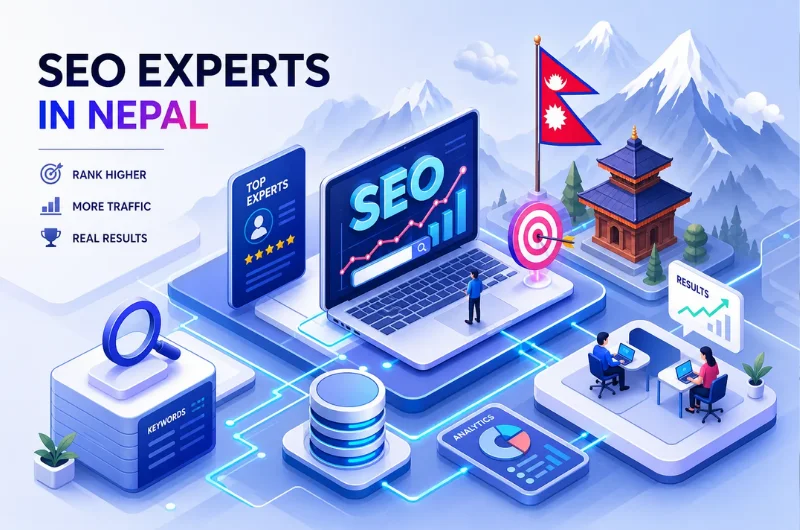
Top SEO Experts in Nepal: Agencies and Freelancers That Deliver Results

If you’re searching for an SEO expert in Nepal, you already know the frustration: a crowded market full of providers promising page-one rankings, and no reliable way to tell the skilled ones apart from those who’ll disappear with your retainer. Nepal’s businesses are moving online at a faster pace each year, and demand for search visibility has outpaced the supply of practitioners who can actually deliver it. After more than a decade building and marketing websites for Nepali businesses at Webtech Nepal, we’ve watched the same pattern repeat: a business owner hires someone who promises page-one rankings, pays three months of retainer, and ends up with a stack of keyword reports and zero traffic growth. The problem isn’t that skilled SEO professionals don’t exist in Nepal. They do. The problem is knowing how to tell them apart from the ones who take your money and go quiet.

This guide gives you a practical framework for doing exactly that. You’ll learn what good SEO actually looks like for Nepal’s market, what services and realistic pricing to expect in 2026, how to spot weak providers before you sign anything, and which interview questions separate genuine expertise from surface-level talk. By the end, you’ll be able to evaluate any SEO agency or freelancer in Nepal with confidence.

What Nepali businesses actually need from SEO right now

Local search and Google Maps visibility

For most service businesses in Kathmandu, Pokhara, and other Nepali cities, Google Maps visibility produces faster, more measurable returns than chasing broad organic rankings. A customer searching “best hotel Thamel” or “accountant Lalitpur” is ready to act. Google Business Profile optimization, NAP consistency across directories, local citation building, and review volume are the levers that control map-pack rankings, and they’re often more achievable in a shorter timeframe than ranking for generic informational keywords.

The GBP signals that move the needle most are primary category accuracy, photo recency, review quality, and a consistent service description. Competition in Kathmandu is intense, which means a fully optimized profile with active reviews can still outrank a competitor with more history but a neglected listing. In Pokhara, that gap tends to widen because local competition is generally softer, making local SEO Nepal optimization even higher-ROI for businesses there.

Multilingual targeting for tourists and international visitors

Nepal’s tourism and trekking sector serves two largely distinct search audiences. International travelers booking an Annapurna Circuit trek or searching “Everest Base Camp cost” are querying in English with high commercial intent. Local operators searching for supplies or partners might search using the Nepali language. A site that treats both audiences the same will underperform with both.

Proper multilingual SEO means separate URL structures for each language version, correctly implemented hreflang annotations, and content that matches the search intent of each audience, not just a translated copy of the same page. International trekking keywords like “15-day Everest Base Camp trek cost” or “best time Annapurna trek” require detailed itinerary pages, safety credentials, and booking-intent signals to rank. Generic content does not win these positions.

Technical performance as a ranking foundation

Slow load times, failing Core Web Vitals, and broken mobile layouts are among the most common issues we find when auditing Nepali business websites. Uncompressed images, overloaded shared hosting, too many plugins, and render-blocking scripts are the usual culprits. These problems don’t just frustrate visitors; they limit how much any other SEO work can accomplish.

Before a content or link-building strategy can deliver results, the technical foundation has to be solid. Google won’t rank a crawlability mess, regardless of how many blog posts you publish or backlinks you earn. Technical SEO is not optional. It’s the prerequisite.

What a qualified SEO expert in Nepal should actually deliver

Technical audit, on-page optimization, and content strategy

A competent SEO engagement starts with a full technical audit: crawlability and indexation review, page speed and Core Web Vitals analysis, title and meta tag audit, mobile usability check, schema markup assessment, and a prioritized action list. “Prioritized” matters here because not every technical issue carries equal impact. A good provider knows which fixes unblock the most ranking potential first.

On-page and content work follows: keyword mapping to the right pages, content gap analysis against ranking competitors, optimized title tags, structured headings, internal linking improvements, and where needed, new content targeting underserved queries. A clear content calendar tied to business goals, not just keyword volume, is what separates a real content strategy from a publishing schedule.

Link building, local citations, and off-page authority

Ethical off-page SEO means earning links from relevant websites through guest placements, digital PR, and editorial outreach, not buying link packages from link farms or private blog networks. Citation consistency across local directories builds the trust signals that reinforce Google Business Profile rankings. These are slow-build tactics, but they produce durable authority that cheap link schemes can’t replicate without risking a manual penalty.

Any provider who can’t explain their specific link-building process in plain terms is either winging it or hiding something you wouldn’t approve of. Ask the question directly, and listen for a concrete answer rather than vague reassurances about “quality links.”

Reporting that connects rankings to real business outcomes

Monthly reports should track more than keyword positions. A solid report covers organic traffic trends from Google Analytics, Search Console impressions and click data, conversion attribution from organic sessions, competitor movement on shared keywords, and a clear plan for the next 30 days. Rankings are a signal; traffic, leads, and revenue are the result you actually hired SEO services in Nepal to produce.

If a provider sends you a rankings PDF without connecting it to any business metric, they’re optimizing for the appearance of progress rather than the reality of it. Push for reports that show business impact, not just position changes.

How to hire an SEO expert in Nepal: realistic pricing for 2026

Freelancer rates vs. agency retainer costs

Here’s what the market actually looks like when you hire an SEO specialist in Nepal in 2026:

Provider type Hourly rate Monthly retainer
Freelance SEO Nepal specialist NPR 1,500, 8,000/hr NPR 15,000, 40,000/mo
SEO agency NPR 3,000, 5,000/hr NPR 25,000, 80,000/mo

The wide range within each tier reflects real differences in what’s included. A NPR 15,000/month freelancer retainer typically covers basic on-page optimization and rank tracking. A NPR 60,000, 80,000/month agency engagement usually includes technical SEO, content production, link building, local SEO, and full reporting. The price jump isn’t markup; it’s scope.

What each price tier realistically gets you

At the lower end of the freelance SEO Nepal range, you’re generally getting keyword research, title tag and meta description updates, and a monthly rankings report. Content creation and link building are rarely included. That’s not a knock on affordable freelancers; it’s just what those hours can cover. If content and links aren’t in scope, you need to budget separately or accept slower momentum.

Mid-to-upper agency retainers in the NPR 50,000, 80,000 range typically include a dedicated team covering technical work, two to four content pieces monthly, active link building, and full analytics reporting. For businesses in competitive sectors like trekking, hospitality, or e-commerce, that fuller scope is often what it takes to move competitive keywords. Matching budget to realistic expectations upfront saves everyone a great deal of frustration.

Red flags that reveal an unreliable SEO provider

Guaranteed rankings and instant results

No legitimate SEO professional guarantees “#1 on Google” or “page one in 30 days.” Google’s ranking algorithm is not within anyone’s control. Any provider making those promises is either unaware of how search algorithms work, or they know exactly what they’re promising and plan to deliver nothing of substance. Either version is a problem.

Realistic timelines for Nepal local business keywords look like this: low-competition local terms can start showing movement in 6, 10 weeks, while more competitive industry terms typically take 3, 5 months. Campaigns showing meaningful organic traffic growth generally land in the 3, 6 month window. Any SEO expert for Nepali businesses who skips that conversation is selling you something they can’t deliver.

No verifiable portfolio, vague reporting, and locked-out data

A provider who can’t show before-and-after case studies with real traffic data has no track record worth trusting. Testimonials alone don’t prove performance; metrics do. Ask for case studies that include the baseline, what was done, and the measurable outcome. If the response is a vague reference to “many successful clients” without specifics, that’s your answer.

Watch especially for providers who insist on controlling your Google Analytics or Search Console access. Your own data belongs to you. Any provider who won’t grant you direct access to your accounts and instead shares only sanitized screenshots is hiding the full picture, and that’s never a sign of confidence in their own results.

Black-hat shortcuts and one-size-fits-all packages

Link farms, private blog networks, keyword stuffing, and comment spam are still sold in cheap Nepal SEO packages. These tactics can produce short-term ranking movement followed by a Google penalty that wipes out months or years of organic traffic. Businesses that get burned this way often don’t connect the penalty to the black-hat package they purchased six months earlier.

Equally problematic are generic bundled packages that don’t account for your business’s actual competition, keyword opportunity, or goals. SEO strategy is not a commodity. A trekking company in Pokhara needs a fundamentally different approach than an e-commerce retailer in Kathmandu. A provider offering the same package to both has no real strategy for either.

How to vet SEO candidates before you commit

Interview questions that separate real expertise from surface knowledge

These six questions reliably distinguish practitioners from people who have read about SEO without doing it:

  • “Walk me through an SEO audit you ran. What did you find, and what changed afterward?”A strong answer includes specific issues found, the prioritization logic, and measurable outcomes. A weak answer stays generic.
  • “If organic traffic dropped 25% last month, what are your first five checks?”This reveals diagnostic thinking. Strong answers go to Search Console, algorithm update timelines, technical crawl issues, manual actions, and competitor movement.
  • “Show me a campaign where your SEO work produced business results, not just rankings.”Rankings are intermediate metrics. A competent practitioner knows how to connect their work to traffic, leads, or revenue.
  • “How do you evaluate whether a backlink is worth pursuing?”This surfaces link-building judgment and reveals whether they understand quality signals versus volume chasing.
  • “How would you explain an SEO recommendation to a developer who doesn’t want to make the change?”Communication and cross-functional influence are real parts of the job.
  • “What’s your process for mapping keywords to specific pages?”Keyword mapping is foundational. Vague answers here usually mean vague execution.

A practical checklist before you sign anything

Use this to evaluate any SEO provider before committing to a contract:

  • Verified case studies with baseline traffic or conversion data, not just claims
  • Direct access granted to your own Google Analytics and Search Console accounts
  • Transparent monthly reporting with a defined deliverable list included in the contract
  • No long-term lock-in without performance milestones tied to deliverables
  • A clear explanation of their link-building process and content creation workflow
  • A defined onboarding process that includes a technical audit before strategy recommendations

Why Webtech Nepal works as a long-term digital growth partner

SEO without a solid website is like advertising a broken store

Most standalone SEO engagements hit a ceiling at some point because the site’s technical foundation limits what’s achievable. Core Web Vitals failures, hosting environments that can’t handle traffic spikes, CMS configurations that create duplicate content by default, or a page architecture that buries key service pages all act as hard limits on organic growth. Fixing those issues requires development access, not just SEO knowledge.

At Webtech Nepal, SEO is built into the development process from the start. Managed hosting, site speed optimization, mobile performance, and technical architecture are handled by the same team doing the marketing work, a model we’ve applied consistently across client engagements. That integration removes the coordination friction that slows down most standalone SEO campaigns and means technical fixes actually get implemented rather than sitting in a developer’s backlog.

Representative results from Nepal businesses

Here are representative outcomes from recent client campaigns: a tourism operator in Pokhara saw organic inquiries double within five months of a combined technical overhaul and local SEO campaign. A Kathmandu-based service business moved from near-zero organic traffic to over 2,000 monthly visitors in the same timeframe, with qualified leads increasing in direct proportion. An e-commerce client saw a 70% increase in sales attributed to organic search after technical fixes cleared the Core Web Vitals failures that had suppressed their visibility. These are client-reported outcomes; full before-and-after data is available on request.

We don’t ask you to take these results on faith. Ask us for the supporting data and we’ll walk you through it.

Get a free site audit and see exactly where you stand

Webtech Nepal offers a free technical site audit that identifies your current SEO gaps, page speed issues, and local visibility problems. You’ll receive specific findings, not a sales presentation dressed up as analysis. If there are crawlability problems limiting your indexed pages, Core Web Vitals failures suppressing your rankings, or Google Business Profile gaps hurting your map-pack visibility, the audit will show you exactly what they are and what it would take to address them.

Reach out to our team to request your free audit. It’s a no-risk way to get a professional assessment of where your site actually stands before you commit to any retainer with anyone.

How to find and hire the right SEO expert in Nepal

The gap between the best and worst SEO providers in Nepal is genuinely wide. Skilled freelancers and strong agencies exist, but so do providers selling guaranteed rankings, low-effort link packages, and monthly reports that say nothing. The difference isn’t always obvious from a sales conversation, which is why the checklist and interview questions in this guide matter.

Finding the right SEO expert in Nepal comes down to verifiable proof of results in comparable situations, transparent pricing tied to defined deliverables, and a provider whose work integrates with your broader digital setup rather than operating in isolation. Use the framework here to filter fast, and don’t skip the audit step before committing.

If you want a team with a proven track record of building and marketing Nepali businesses online, Webtech Nepal is ready to show you exactly what’s holding your site back and what it would take to fix it. Start with the free audit and go from there, hire an SEO expert in Nepal who can demonstrate results, not just promise them.

Frequently asked questions about hiring an SEO expert in Nepal

How much does an SEO expert in Nepal cost?

Freelance SEO Nepal specialists typically charge NPR 1,500, 8,000 per hour or NPR 15,000, 40,000 per month on retainer. SEO agency retainers generally run NPR 25,000, 80,000 per month depending on scope. The difference in cost reflects the difference in deliverables, a lower retainer usually means basic on-page work, while higher-tier engagements include technical SEO, content production, and active link building.

How long does it take to see results from SEO services in Nepal?

Low-competition local keywords can start moving within 6, 10 weeks. More competitive terms typically take 3, 5 months before meaningful ranking improvement is visible. Campaigns producing sustained organic traffic growth generally show clear results within the 3, 6 month window. Any provider promising faster guarantees should be treated with skepticism.

What should I look for when choosing a Nepal SEO agency?

Verified case studies with real traffic data, transparent reporting tied to business metrics, direct access to your own analytics accounts, and a clear explanation of their link-building process are the non-negotiables. Avoid any agency that promises guaranteed rankings or won’t show you concrete examples of past performance.

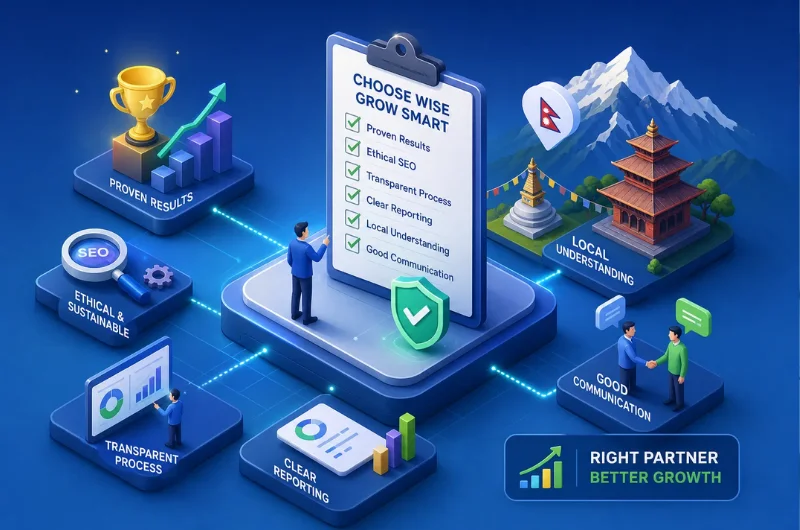
How to Choose Best SEO Company in Nepal: A Practical Checklist for SMEs

If you’re evaluating an Best SEO company in Nepal, you already know the pitch: page-one rankings, guaranteed results, fast turnarounds. Every agency makes the same promises. The reality is that results vary widely, and for an SME working with a limited budget, a bad hire can burn months and significant budget on activity reports that never move the needle. The market has enough noise to trip up even experienced business owners who’ve hired vendors before.

Some firms in Nepal genuinely deliver. Webtech Nepal, for example, has built repeatable SEO processes tied to solid technical web infrastructure rather than keyword stuffing, an approach that matters more than most SMEs realize when they’re first evaluating proposals. Understanding what separates firms like this from the noise is exactly what this guide is designed to help you do.

This guide covers what services to expect from a credible SEO agency in Nepal, how pricing breaks down by business size, how to read proof of results, and a vetting checklist built for 2026. By the end, you’ll be able to shortlist three to five agencies and walk into every discovery call knowing exactly what to ask.

What a legitimate SEO agency in Nepal actually delivers

A real Nepal-based SEO company offers more than monthly keyword reports. Any agency worth hiring should cover four service pillars consistently, and if one of them is missing from the proposal, that’s a gap worth questioning before you sign anything.

Technical SEO and site health

Technical SEO covers the infrastructure your rankings depend on: crawlability, Core Web Vitals, schema markup, XML sitemap health, mobile optimization, and canonical tag management. These aren’t optional extras. Based on market-rate research, agencies offering “full SEO” for under NPR 10,000 per month rarely cover technical work properly, because it takes time and specific expertise to do well. Even in the NPR 15,000 to 20,000 range, verify exactly which technical deliverables are included before you commit.

Content strategy and on-page optimization

On-page work includes keyword-targeted page rewrites, meta structures, internal linking improvements, and content briefs for blog posts or landing pages. Content without technical grounding rarely ranks in competitive niches because search engines can’t properly crawl and interpret pages that have structural problems underneath the writing.

Local and international link-building

Local citation building covers Google Business Profile optimization, NAP consistency across directories, and placements in Nepali business directories. International outreach includes editorial placements, guest posts, and press releases targeting relevant publications. SMEs in tourism, export, or businesses targeting diaspora audiences need both. A realistic link-building timeline is three to six months before you see the authority gains reflected in rankings.

What to budget: SEO pricing by business size in Nepal

Before you request a proposal, knowing the market rate saves you from two problems: overpaying for a basic package, or being drawn to a suspiciously cheap offer that signals low-quality work. Here’s how 2026 pricing breaks down in practice.

Small clients should expect to spend NPR 15,000 to 40,000 per month for local SEO basics, covering keyword research, on-page fixes, and Google Business Profile optimization. Medium-sized businesses running growth campaigns with content production and link-building land in the NPR 35,000 to 80,000 per month range. Enterprise clients with competitive keywords, multiple locations, or large e-commerce catalogs typically budget NPR 75,000 to 300,000 or more per month.

For SMEs that aren’t ready to commit to a retainer, project-based engagements make sense as a starting point. A technical audit with on-page cleanup runs NPR 15,000 to 30,000 as a one-off. For sustained organic growth, though, retainers win: SEO compounds over time, and campaigns that stop after one project lose momentum quickly.

One structural advantage Nepal-based SEO firms offer is a significant cost differential compared to equivalent US or UK agencies. The same level of senior-level strategy that would cost $2,500 to $5,000 per month in Western markets is accessible at a fraction of that through a credentialed Nepal agency. The caveat is that “credentialed” is doing real work in that sentence.

How to verify an SEO company in Nepal actually delivers results, not just reports

This is where most SMEs get burned. Agencies produce activity reports full of keywords tracked and tasks completed, while organic traffic stays flat and leads don’t move. Learning to demand proof of outcomes rather than activity changes how you evaluate every proposal you receive.

Reading case studies and client reviews critically

Platforms like Clutch and GoodFirms are among the more reliable sources for agency reviews. Clutch explicitly verifies business registration, legal history, and client feedback before a provider earns certification badges, which require three or more verified, high-rated reviews within the past 24 months. That standard is meaningfully different from a generic five-star rating on a website the agency controls. GoodFirms is useful for initial research but applies a less rigorous verification process, so treat listings there as a starting point rather than a final filter.

When reading reviews, look for specifics. A review that says “they boosted our visibility” tells you almost nothing. A review that says “we went from 800 to 2,400 monthly organic sessions in five months, and inbound inquiries increased by 28 per month” gives you something to calibrate against. Agency-published case studies from Nepal-based SEO providers have documented results including 200% or more organic traffic growth within six months and 15-plus keywords reaching top-three positions. Treat these figures as illustrations of what well-executed campaigns can achieve, and always ask whether a case study was independently verified or self-reported by the agency.

KPIs to agree on before signing any contract

Before you commit, the agency should agree in writing to track and report: organic sessions, keyword position movement, domain authority growth, click-through rate from search, and conversion events including form fills, calls, and purchases. Any agency that only reports on impressions or “visibility scores” without connecting them to business outcomes is optimizing for reports that look good rather than results that matter.

Why combining SEO with web design fast-tracks your rankings

Verifying an agency’s results and process is only half the equation. The other half is making sure the platform your SEO runs on isn’t working against you. Most SMEs hiring a standalone SEO company in Nepal still have a slow, outdated, or technically broken website. The SEO work gets undermined by infrastructure problems the agency didn’t build and won’t fix. You end up paying for optimization layered on top of a foundation that’s actively working against you.

The integrated advantage: what an all-in-one model looks like in practice

Webtech Nepal addresses that gap by handling web design, development, SEO, managed hosting, and ongoing support under one roof. When the same team that built your site is also running your SEO campaign, technical optimizations like page speed, Core Web Vitals, SSL configuration, and structured data implementation happen faster and more cohesively. There’s no back-and-forth between a developer and a separate SEO team trying to coordinate changes through email chains. For SMEs looking to hire an Best SEO company in Nepal that can manage both the technical foundation and the ongoing optimization, this kind of integrated model is worth evaluating directly with the Webtech Nepal team to discuss your current site setup and goals.

How managed hosting and ongoing support protect SEO gains

Rankings drop when sites go down, load slowly after a traffic spike, or get compromised by a security breach. Managed hosting with proactive maintenance keeps the site’s technical health stable between audits. For businesses that have invested months in building organic rankings, having hosting and SEO under the same provider is a risk management decision, not just a convenience.

The SME vetting checklist: 8 questions to ask any SEO company in Nepal before you sign

Use these questions on every discovery call. The answers will tell you more about an agency’s process and integrity than any proposal document will.

Questions about process and transparency

  1. What does your technical audit process include, and will you share the full report?A credible agency runs a structured audit and gives you ownership of the findings, not just a summary.
  2. Which tools do you use for keyword research and rank tracking?Answers should name specific platforms. Vague answers here signal process gaps.
  3. How do you build backlinks, and can you show examples of placements you’ve earned?Ask for URLs. Real link-building produces real placements you can verify.
  4. What does a typical monthly report look like, and how often do we meet to review it?You should receive a report you can actually read, not a PDF of charts with no commentary.

Questions about timelines, contracts, and red flags

  1. How long before we should expect measurable organic traffic growth?Honest answer: three to six months for meaningful movement, six to twelve months for sustained ROI in competitive markets.
  2. Do you guarantee rankings?If yes, walk away. No legitimate agency guarantees specific positions becausesearch engine algorithmsare outside anyone’s control.
  3. Is there a minimum contract length, and what are the exit terms?Watch for lock-in contracts with no performance milestones and unclear ownership of your accounts and content.
  4. Can you show a case study from a business similar to ours?Relevant experience in your vertical matters. A generic case study doesn’t tell you whether the agency understands your market.

The clearest red flags to watch for across any agency conversation: guaranteed rankings in 30 days, no transparency on reporting, a vague link-building strategy that involves “building authority” without specifics, and pricing far below market rate. Any package under NPR 10,000 per month for “full SEO” is not full SEO.

FAQs on timelines, ROI, and reporting

How long does SEO take in Nepal?

Most campaigns targeting competitive keywords take three to six months to show meaningful traffic movement. Local SEO in lower-competition Nepali markets can move faster, sometimes showing map-pack visibility within 30 to 60 days. Set your expectations before the engagement starts so you’re measuring progress against a realistic baseline, not the six-week guarantee another agency may have promised.

What ROI should you realistically expect?

Frame ROI in terms of lead value rather than just traffic volume. An SME spending NPR 50,000 per month on SEO that generates 20 qualified leads monthly is getting strong ROI if each lead is worth NPR 10,000 or more. Before you sign, define your target cost-per-lead so you and the agency are measuring the same thing from day one.

What does good reporting look like?

A monthly report worth reading includes keyword position movement, organic session trends, pages that gained or lost traffic, links built with source URLs, and plain-English commentary explaining what changed and why. If an agency can’t deliver that structure consistently, it shouldn’t make your shortlist. You’re paying for insight, not a spreadsheet.

Make the decision with confidence

Choosing the right SEO company in Nepal comes down to verifiable results and a reporting structure you can hold them accountable to every month. Don’t let a polished proposal substitute for documented proof.

The pricing advantage of working with a Nepal-based SEO agency is real, but only when the agency delivers technically sound campaigns rather than monthly activity reports. If your website has structural problems, fix them first, or find a provider like Webtech Nepal that handles both. SEO investment built on a weak technical foundation takes longer and costs more to produce results.

Take the checklist above into every discovery call. Ask for case studies with specific metrics. Check Clutch for verified reviews and use GoodFirms as a secondary reference. Walk away from any guarantee of page-one rankings in 30 days. The right SEO company in Nepal won’t make that promise. Instead, they’ll show you a realistic plan, grounded in the research-backed timeline of six to twelve months for sustained ROI, and a strategy built to hold those gains over time.