How Learning Management Systems Are Revolutionizing Education

Learning Management Systems (LMS) have revolutionized education in the digital age by providing a centralized platform for teachers and students to interact and collaborate. With LMS, educators can create and manage online courses, share resources, assign tasks, and track student progress. This eliminates the need for physical classrooms and traditional teaching methods, allowing flexible learning environments catering to individual student needs.

Learning Management Systems enables distance learning opportunities, breaking down geographical barriers and making education accessible to individuals without the means or opportunity otherwise. Students can access course materials at their own pace from anywhere with an internet connection, enabling them to fit their studies around work or other commitments. In addition, LMS provides a range of tools, such as discussion forums, chat functions, and video conferencing capabilities that facilitate communication between students and instructors.

Learning Management Systems have transformed education by harnessing technology to enhance teaching methods and accessibility. As technology advances, LMS will evolve further to meet the ever-changing needs of educators and learners in the digital age. The potential benefits of these systems are vast: increased engagement and collaboration among students, personalized learning experiences tailored to individual needs, and expanded educational opportunities worldwide – all contributing towards a more inclusive and effective educational landscape.

How Learning Management Systems Are Revolutionizing Education

Breaking Down Geographical Barriers:

Learning Management Systems have torn down geographical barriers, making education accessible to learners worldwide. Students can now enroll in courses from prestigious institutions regardless of their physical location, empowering learners in remote areas or those with mobility constraints to pursue quality education.

Personalized Learning Journeys:

LMS empowers educators to customize learning pathways based on individual student needs, learning styles, and performance levels. Adaptive learning algorithms analyze students’ progress and provide tailored content, ensuring each learner gets the support and challenges required for their unique growth.

Enhanced Collaboration and Interaction:

Traditional classrooms often limit collaborative opportunities, but LMS fosters seamless communication and collaboration among students, teachers, and peers. Discussion forums, virtual classrooms, and group projects facilitate meaningful interaction and knowledge exchange, fostering a vibrant learning community.

Rich Multimedia Content and Interactivity:

Learning Management Systems offer diverse multimedia resources like videos, interactive simulations, and gamified quizzes. These engaging elements capture students’ attention and cater to varied learning preferences, boosting comprehension and retention.

Real-time Assessment and Feedback:

Gone are the days of waiting for exams and assignments to be graded. LMS enables instant feedback and assessment, empowering students to promptly identify and address knowledge gaps. Educators can also use real-time data to adapt teaching methods for optimal learning outcomes.

Empowering Self-paced Learning:

Learning Management Systems allow students to learn at their own pace, ensuring no one gets left behind or held back. Students can revisit challenging concepts and accelerate through material they grasp quickly, promoting a deeper understanding of the subject matter.

Resource Centralization and Accessibility

LMS acts as a centralized repository for learning materials, eliminating the need for physical textbooks and course handouts. Learning Management System reduces costs and ensures learners have 24/7 access to study materials, enabling convenient and flexible learning.

Professional Development for Educators:

Educators benefit immensely from LMS by accessing professional development courses and collaborative platforms. These resources help instructors stay updated on the latest teaching methodologies, ed-tech tools, and subject matter expertise, enriching their teaching practices.

Data-Driven Decision Making:

Learning Management Systems generate valuable data on student performance, engagement levels, and learning patterns. Institutions can leverage this data to make informed decisions on curriculum design, instructional strategies, and resource allocation to enhance overall learning effectiveness.

Conclusion:

As the world evolves, so does education, and Learning Management Systems have emerged as the catalysts of this revolution. From promoting personalized learning journeys to breaking geographical barriers, LMS empowers educators and learners alike. As we embrace these transformative technologies, we set the stage for a future where education knows no bounds and allows individuals to unlock their full potential.

Why Choose Domain Registration Services in Nepal?

Choosing a domain registration services in Nepal can be one of the most important steps in establishing your brand or business online. A strong online presence is crucial for businesses and individuals in today’s digital age. In Nepal, the domain registration process may seem daunting initially, but it becomes straightforward with the proper knowledge and guidance. In this blog post, we will demystify domain registration in Nepal and provide you with a comprehensive guide to help you establish your online identity.

Choosing Domain Registration Services in Nepal offers several advantages and benefits. Here are some reasons why you should consider registering your domain with Webtech Nepal:

1. Local Expertise: As a domain registration service based in Nepal, Webtech Nepal have in-depth knowledge and understanding of the local market. We are familiar with the specific requirements and regulations related to domain registration in Nepal. Our expertise allows us to provide tailored solutions and guidance that meet the unique needs of businesses and individuals operating within the country.

2. Local Support: Webtech Nepal offer dedicated local support to our clients. Our customer service team is well-versed in the local language and culture, making it easier for you to communicate your requirements and receive prompt assistance. We understand the importance of personalized support and strive to provide a seamless experience throughout your domain registration journey.

3. Faster Response Times: Choosing a local domain registration service means faster response times. When you encounter any issues or need assistance, our team can quickly address your concerns and provide timely resolutions. This agility ensures minimal downtime and lets you get your website up and running smoothly.

4. Supporting the Local Economy: Opting for a domain registration service in Nepal helps support the local economy. By choosing local businesses, you contribute to the growth and development of the country’s technology sector. It fosters community and allows collaboration and partnerships within the local business ecosystem.

5. Compliance with Local Laws and Regulations: Domain registration services in Nepal ensure compliance with local laws and regulations. This includes adherence to domain name policies, registration requirements, and data protection guidelines specific to Nepal. By partnering with a service that understands and complies with these regulations, you can avoid any legal complications and operate within the bounds of the law.

6. Cultural Relevance: Registering a domain with a local service in Nepal can provide cultural relevance to your website. A domain name associated with Nepal can create a stronger connection with your target audience and convey a sense of authenticity. It demonstrates your commitment to the local market and establishes a local identity for your online presence.

Choosing a right domain registrar in Nepal

When choosing a domain registration services in Nepal, compare prices, features, and customer support is essential. You should also ensure that the registrar is accredited by a reputable organization, such as the Internet Corporation for Assigned Names and Numbers (ICANN).

Here are some of the factors to consider when choosing a domain registrar:

Price: Domain name registration fees vary from registrar to registrar. Be sure to compare prices before you make a decision.
Features: Some registrars offer additional features like free domain privacy or unlimited email accounts. Be sure to choose a registrar that provides the parts you need.

Customer support: If you have any problems with your domain name, you will need to be able to contact customer support. Be sure to choose a registrar with reliable customer support.

Reputation: Choosing a reputable registrar with a good track record is essential. Be sure to check the registrar’s reviews before you make a decision.

In conclusion, choosing Domain Registration Services in Nepal offers the advantages of local expertise, support, faster response times, supporting the local economy, compliance with local laws, and cultural relevance. By selecting a service provider with a deep understanding of the Nepalese market, you can optimize your online presence and ensure a seamless experience for your website visitors.

Why .com is Still King: The Power of Top-Level Domains

Why .com is Still King? But why is .com still so popular? What makes it more powerful than other TLDs?

This article will explore top-level domains’ power and why .com reigns supreme in the ever-evolving world wide web. The internet has come a long way since its inception, and with it, the evolution of domain names. However, despite the rise of new top-level domains (TLDs), such as .xyz or .blog, .com remains king. It’s estimated that around 46% of all websites use this classic TLD.

From branding to SEO benefits and consumer trust factors, we’ll examine why choosing the right domain extension can significantly impact your online presence. In this blog post, we will explore the reasons behind .com’s continued dominance and the power of top-level domains.

What is a Top-Level Domain (TLD)?

Before diving into the specific benefits of .com, let’s define a TLD. A TLD is the rightmost portion of a website’s domain name, such as .com or .org. It is the highest level in the hierarchical domain name system (DNS) and serves to identify and organize websites on the internet.

One such term is “top-level domain” or TLD for short. Essentially, a TLD is the part of a website address that comes after the dot, such as .com or .org. While it may seem like just a small detail, understanding what a TLD is and how it works can impact your website’s success and visibility online.

The Rise of Domain Names

In the early days of the internet, domain names were used primarily to differentiate websites and make them easier to find. But as the domain name system expanded and new TLDs such as .net and .org emerged, domain names became more than identifiers. They became powerful tools for branding, marketing, and search engine optimization (SEO).

Why .com is Still King?

1. Credibility and Trust

One of the most significant reasons why .com continues to be the most popular TLD is credibility. .com domains have been around since the early days of the internet, and as such, they are instantly recognizable and instill a sense of trust and authority in visitors. When you see a .com domain name, you know the website has been around for a while and is likely to be a legitimate business or organization.

2. Easy to remember

Another key advantage of .com is that it’s easier to remember than other TLDs. People naturally associate the internet with .com, so when they search for a website, they are more likely to type in a .com address first. This is particularly important for businesses that rely on repeat customers, making it easier for customers to find them online.

3. Branding

In addition to being memorable, .com domains also make for great branding. They are short, easy to pronounce, and immediately recognizable. This can be particularly important for companies looking to establish a strong online presence.

4. SEO Benefits

While the TLD itself doesn’t directly affect search engine optimization (SEO), .com domains tend to have better SEO because they are more likely to be linked to and shared online. When people link to your website, they use your domain name as the anchor text, which means that having a .com domain can provide a slight boost in SEO.

To take it a step further, combine your local SEO efforts with earning links through digital PR. When your business is featured in local publications, blogs, or industry websites, it builds authority and helps improve your search rankings. These backlinks signal to search engines that your site is trustworthy and relevant. By aligning local SEO with digital PR, you create a well-rounded strategy that attracts both local traffic and broader visibility.

5. Availability

Despite the popularity of .com domains, plenty is still available. Over 150 million .com domain names are registered, leaving plenty of room for new businesses and organizations to find their perfect domain name.

6. Global Reach

While .com is a US-based TLD, it’s not limited to US businesses. Many international companies prefer .com over country-specific TLDs because it gives them a global appeal. A .com website has a broader reach, as it’s instantly recognizable and understandable by people worldwide.

Alternative TLDs

Of course, .com isn’t the only TLD available. There are over 1,500 TLDs, including options like .biz, .info, and .org. While these TLDs have advantages, they still need the same credibility and trust that a.com domain offers. For example, .org domains are often associated with non-profit organizations, while .biz domains are seen as more commercial.

While .com is the dominant TLD, it’s worth noting that other TLDs also have their advantages. Here are some examples:

1. .org Domains

The .org TLD is designed for non-profit organizations and is often chosen by charities, NGOs, and other social enterprises. It gives these organizations a sense of legitimacy and credibility, as it signifies their commitment to a cause rather than a profit motive.

2. .net. Domains

The .net TLD stands for network and is typically used by businesses that provide networking or communication services. It’s also famous for tech companies, startups, and software development firms. .net is a great alternative to .com when unavailable, as it offers similar recognition and credibility.

3. .co. Domains

The .co TLD is a reasonably new addition to the domain name system, but it has quickly gained popularity as a viable alternative to .com. The .co TLD originally stood for Colombia but has been repurposed as a global TLD. Startups and entrepreneurs often use it to create a memorable and distinctive brand.

Conclusion

In conclusion, top-level domains play a critical role in the online world, and .com is still the king of TLDs. Its credibility, memorability, SEO benefits, and global reach make it the preferred choice for businesses and websites. While plenty of alternative TLDs are available, .com is still the most popular and essential element of any successful online presence. When starting a new website and domain registration, look for a .com domain name first.

Choosing the right mobile app development company in Nepal

If you are looking for a mobile app development company in Nepal, contact Webtech Nepal, we build mobile apps for education, gaming, corporate, government, e-commerce, etc. Webtech Nepal can help you develop a mobile app that meets your needs and budget. We are a team of highly skilled software engineers dedicated to helping businesses harness the power of mobile technology. With our expertise in developing innovative and user-friendly mobile applications, we provide cost-effective solutions that propel your business forward. Whether you’re a startup or an established enterprise, our team is committed to transforming your app idea into a successful reality.

In recent years, Nepal has emerged as a growing hub for mobile app development, leveraging its talented pool of software engineers and entrepreneurs. With a rapidly expanding mobile user base and a thriving tech ecosystem, Webtech Nepal offers a suitable environment for businesses and individuals looking to develop innovative mobile applications. In this article, we will explore Nepal’s mobile app development scene, highlighting the key factors contributing to its success and the opportunities it presents.

Why to choose Webtech Nepal as a mobile app development in Nepal?

Mobile app development has become vital for businesses to engage with their customers and enhance their online presence. With the growing demand for mobile apps, choosing the right mobile app development company is crucial to ensure your business goals are effectively met. Nepal has emerged as an emerging hub for mobile app development services due to its talented pool of developers and cost-effective solutions.

We have been providing custom mobile application solutions for businesses across various industries for years. Our team of expert developers possesses extensive knowledge and experience in creating innovative, high-quality, and user-friendly mobile applications that cater to your specific business needs.

1. Exceptional Expertise:

Our team comprises experienced software engineers who excel in mobile app development. We deeply understand industry best practices, the latest frameworks, and emerging technologies, enabling us to build high-performance, scalable, and feature-rich mobile applications. With our expertise, your app will stand out in the competitive market.

2. Tailored Solutions:

We understand that every business is unique, and so are their mobile app requirements. That’s why we offer customized solutions aligning with your goals and objectives. From conceptualization to design, development, and deployment, we work closely with you to ensure your app reflects your brand identity and meets your target audience’s expectations.

3. User-Centric Approach:

User experience is at the core of our mobile app development process. We prioritize creating intuitive and engaging interfaces that enhance user satisfaction and retention. Conducting thorough user research and usability testing ensures that your app provides a seamless and enjoyable experience, leading to increased user engagement and loyalty.

4. Cost-Effective Development:

We understand the importance of budget constraints, especially for startups and small businesses. Our mobile app development services in Nepal offer cost-effective solutions without compromising quality. We optimize the development process to minimize costs while delivering exceptional results, making our services an excellent value for your investment.

5. Timely Delivery:

We value your time and understand the significance of launching your app within the desired timeframe. Our team follows agile development methodologies, allowing us to deliver projects on time without compromising quality. With our efficient project management practices, you can rely on us to meet your deadlines and launch your app promptly.

Benefits of hiring a mobile app development company in Nepal

Hiring a mobile app development company in Nepal offers numerous benefits, including access to a skilled workforce, cost-effectiveness, timely delivery, cultural understanding, quality assurance, and effective communication. Whether a startup or an established enterprise, partnering with a Nepali company can help you develop innovative, user-friendly mobile applications that drive business growth and success.

Here are some of the key advantages:

1. Skilled Workforce: Nepal is known for its highly skilled and talented pool of software engineers. Mobile app development companies in Nepal have access to a qualified workforce with expertise in various programming languages, app development frameworks, and emerging technologies. By hiring a company in Nepal, you can benefit from these professionals’ technical proficiency and experience.

2. Cost-Effectiveness: Outsourcing mobile app development to Nepal can significantly reduce costs compared to hiring in-house developers or choosing development agencies in other countries. Nepal offers competitive rates without compromising on the quality of work. This cost-effectiveness allows businesses, especially startups and small enterprises, to allocate their resources efficiently and invest in other aspects of their business growth.

3. Time-Efficiency: Mobile app development companies in Nepal are known for their efficiency and timely project delivery. They follow agile development methodologies, allowing for iterative development, regular communication, and quick adaptation to changing requirements. Their commitment to timely delivery ensures that your app is developed and launched within the desired timeframe, giving you a competitive edge in the market.

4. Cultural Understanding and Localization: Hiring a mobile app development company in Nepal provides cultural understanding and localization advantages. These companies deeply understand the local market, user preferences, and cultural nuances. This knowledge enables them to create mobile applications that resonate with the target audience, increasing user engagement and satisfaction.

5. Quality Assurance and Support: Mobile app development companies in Nepal emphasize quality assurance throughout the development process. They have robust testing and quality control mechanisms to ensure the app is bug-free and functions seamlessly across different devices and platforms. Additionally, they provide post-development support and maintenance services, ensuring that your app remains up-to-date and performs optimally.

6. Collaboration and Communication: Nepali mobile app development companies value collaboration and effective client communication. They maintain regular communication channels to understand your requirements, provide progress updates, and incorporate feedback throughout the development cycle. This collaborative approach ensures that the final product aligns with your vision and meets your business objectives.

Consider choosing a mobile app development company in Nepal.

By carefully evaluating these factors and conducting thorough research, you can choose a mobile app development company that aligns with your goals, delivers a high-quality app, and becomes a valuable long-term partner in your business’s digital success. When choosing a mobile app development company, several important factors must be considered. Here’s a step-by-step guide to help you make an informed decision:

1. Define Your Requirements: Before searching for a mobile app development company, clearly define your app’s requirements, objectives, target audience, and desired features. This will help you communicate your needs effectively and evaluate potential companies based on their ability to meet those requirements.

2. Experience and Expertise: Look for a company with a proven track record in mobile app development. Consider their experience developing apps for your target platforms (iOS, Android, or cross-platform). Review their portfolio and client testimonials to gauge the quality of their previous work. An experienced company will deeply understand industry best practices and emerging technologies.

3. Technical Skills and Knowledge: Assess the company’s technical expertise by evaluating the development team’s skills. Check their proficiency in programming languages, app development frameworks, and tools. They should be up-to-date with the latest trends and have experience integrating advanced features such as AI, AR/VR, or IoT if relevant to your project.

4. Portfolio and Case Studies: Review the company’s portfolio and case studies to assess the diversity and quality of their previous projects. Look for apps that are similar in complexity or industry to your own. This will give you an idea of their ability to handle your requirements and deliver a successful app.

5. Client References: Request references from past clients or seek out reviews and testimonials about the company’s services. Hearing from their previous clients will provide insights into their professionalism, communication, adherence to deadlines, and overall satisfaction with the end product.

6. Communication and Collaboration: Effective communication and collaboration are crucial for successful app development. Ensure that the company has a streamlined communication process and is responsive to your inquiries. Clear communication channels will enable you to stay involved throughout the development cycle and provide feedback when needed.

7. Quality Assurance and Support: Inquire about the company’s quality assurance practices and how they ensure the app’s performance, security, and functionality. Additionally, ask about their post-launch support and maintenance services to provide that they can address any issues that may arise after the app is launched.

8. Cost and Budget: While cost should not be the sole determining factor, it is essential to consider your budget and the company’s pricing structure. Evaluate the value they offer with their pricing. A transparent and well-defined pricing model will help you understand what you are paying for and avoid unexpected costs.

9. Timelines and Project Management: Discuss the company’s approach to project management and how they handle timelines and milestones. A reliable company will provide a clear project plan and update you on the development progress. They should have a well-defined process to address potential delays or changes in requirements.

10. Support for Future Growth: Consider whether the company can support your app’s future growth and scalability. Mobile apps require updates, feature enhancements, and compatibility with new OS versions. Ensure that the company offers long-term support and has a plan for the app’s ongoing maintenance and updates.

Conclusion:

Harness the potential of mobile technology with our exceptional mobile app development services in Nepal. Our skilled team of software engineers is dedicated to creating innovative, user-friendly, and cost-effective mobile applications tailored to your business needs. Contact us today to discuss your app idea and embark on a transformative journey toward success.

Choosing the right web design company in Nepal

Choosing the right web design company in Nepal is essential for the success of your website. Here are some valuable tips to help you make an informed decision: This blog post will provide essential tips to help you make an informed decision and find the perfect web design company for your needs.

In today’s digital age, having a well-designed website is crucial for any business or organization. A professionally designed website enhances your online presence and plays a vital role in attracting and engaging visitors. However, creating a website requires expertise and skills that may be beyond the capabilities of an average individual. That’s where web design companies come into play. Choosing the right web design company can be daunting, as countless options are available.

1. Define Your Requirements

Defining your requirements and objectives is essential before you search for a web design company. Take the time to identify the purpose of your website, your target audience, and the specific features and functionalities you need. This will help you communicate effectively with potential web design companies and ensure they understand your vision.

2. Review Their Portfolio

A reputable web design company should have a portfolio showcasing their previous work. Take the time to review their portfolio to get a sense of their design style, creativity, and the types of websites they have developed. Please pay attention to the user experience and functionality of the websites they have created. Look for diversity in their portfolio to see if they can handle various industries and design requirements.

3. Check Client Testimonials and Reviews

Client testimonials and reviews provide valuable insights into a web design company’s reliability, professionalism, and customer satisfaction. Search for reviews on independent websites, social media platforms, and business directories. Testimonials and reviews give you an idea of the company’s strengths and weaknesses and ability to meet deadlines and deliver quality work.

4. Assess their Expertise and Experience

It is important to consider the expertise and experience of a web design company before making a decision. Please find out how long they have been in the industry and the number of projects they have completed. Look for a company with experience working with businesses similar to yours or within your industry. This demonstrates their ability to understand your unique requirements and deliver effective solutions.

6. Inquire About the Team and Project Management:

Learn about the team working on your project. Inquire about their expertise, qualifications, and roles within the agency. Additionally, ask about the project management process. A well-organized agency with a clear project management approach is more likely to deliver your project on time and within budget.

5. Evaluate Communication and Support

Effective communication is crucial for a successful web design project. During your initial interactions with the company, assess their communication skills and responsiveness. Are they attentive to your needs and objectives? Do they respond promptly to your inquiries? Additionally, please inquire about the support they provide after the completion of the project. A reliable web design company will offer ongoing support and be available to address any issues or updates that may arise.

6. Consider Pricing and Value

While price shouldn’t be the sole determining factor, it is essential to consider your budget when choosing a web design company. Request quotes from multiple companies and compare their pricing structures and packages. However, be wary of highly low-cost options, which may compromise quality and functionality. Look for a company that offers a balance between affordability and value. Consider the long-term benefits and return on investment a well-designed website can provide for your business.

7. Inquire About the Development Process

Understanding the web design company’s development process is crucial for ensuring a smooth and successful project. Inquire about their design and development methodologies, their approach to project management, and the tools they use. A transparent and organized development process indicates professionalism and a commitment to delivering high-quality results.

8. Discuss Ownership and Future Scalability

Before finalizing your decision, discuss ownership rights and future scalability options with the web design company. Ensure that you will fully own your website once it is completed. Additionally, discuss the potential for future updates, enhancements, and scalability.

9. Consider Ongoing Support and Maintenance:

A website requires ongoing support, updates, and maintenance even after its initial development. Inquire about the agency’s post-launch support and maintenance services. Ensure they offer timely support and are available to address any issues or updates that may arise in the future.

10. Seek a Long-Term Partnership:

Building a website is not just a one-time project. Choosing a web design agency with whom you can establish a long-term partnership is beneficial. A trusted agency that understands your evolving needs can provide ongoing support, updates, and future enhancements as your business grows.

By following these tips and conducting thorough research, you can find the right web design agency that aligns with your goals, delivers high-quality results, and provides a seamless web design experience.

What is web design, and what do web designers do?

Web design refers to creating and arranging visual elements, content, and functionality to build aesthetically appealing, user-friendly, and effective websites to achieve their intended purpose. It involves the combination of various disciplines, such as graphic design, user experience (UX) design, user interface (UI) design, and coding.

Web designers are professionals who specialize in creating and designing websites. They possess a range of skills and knowledge to craft websites that align with the goals and requirements of their clients. Here are some key responsibilities and tasks of web designers:

1. Gathering Requirements: Web designers work closely with clients to understand their needs, objectives, and target audience. They gather information about the website’s purpose, desired functionalities, and branding or design preferences.

2. Planning and Wireframing: Web designers create a blueprint for the website, often through wireframes or prototypes. This stage involves structuring the website’s layout, determining the placement of key elements, and planning the user flow and navigation.

3. Visual Design: This is where web designers showcase their creativity. They select appropriate color schemes, typography, graphics, and images that align with the client’s brand identity and create a visually appealing website. They focus on creating a consistent, cohesive design that enhances user experience.

4. User Experience (UX) Design: Web designers prioritize the user’s experience by ensuring the website is intuitive, easy to navigate, and user-friendly. They consider information architecture, user interactions, and accessibility to create a seamless and enjoyable browsing experience.

5. User Interface (UI) Design: UI design involves designing the interface elements that users interact with, such as buttons, forms, menus, and icons. Web designers create visually engaging and functional UI components that enhance usability and guide users through the website.

6. Responsive Design: With the increasing use of mobile devices, web designers incorporate responsive design principles to ensure that websites adapt and display correctly on various screen sizes and devices. This involves optimizing layouts, images, and content for a consistent experience across different platforms.

7. Coding and Implementation: While web designers may only sometimes handle the coding aspects themselves, they should have a solid understanding of HTML, CSS, and other web technologies. They collaborate with web developers to ensure the design is implemented correctly and the website functions as intended.

8. Testing and Optimization: Web designers conduct testing to identify and fix any usability issues, browser compatibility issues, or performance problems. They continuously monitor and optimize the website’s design and functionality to improve its performance and user satisfaction.

Overall, web designers are crucial in creating visually appealing and functional websites that effectively communicate the client’s message, engage users, and drive desired actions. They combine their artistic and technical skills to bring ideas to life on the digital platform.

Differentiate between a Web designer and a web developer.

While web designers and web developers often work together to create websites, they have different roles and responsibilities. Here’s a breakdown of the key differences between web designers and web developers:

Web Designer roles and responsibilities:

1. Focus: Web designers primarily focus on the visual aspects of a website, including its aesthetics, user interface (UI), and user experience (UX). They aim to create visually appealing and engaging designs that align with the client’s brand identity and target audience.

2. Skills: Web designers have expertise in graphic design, layout design, typography, color theory, and design software tools like Adobe Photoshop, Illustrator, or Sketch. They possess a creative eye and understand the principles of design, including composition, balance, and visual hierarchy.

3. Responsibilities: Web designers are responsible for gathering client requirements, creating wireframes and mockups, designing the website’s visual elements, selecting colors and typography, and creating a cohesive and visually pleasing user interface. They often collaborate with web developers to ensure the design is implemented correctly.

4. Tools: Web designers use design software to create visual designs and prototypes, such as wireframing tools, graphic design software, and prototyping tools like Figma, InVision, Adobe XD, Marvel, UXPin., Moqups, Justinmind, Lucidchart, Balsamiq etc.

Web Developer roles and responsibilities:

1. Focus: Web developers focus on the technical aspects of website creation, including coding, functionality, and performance. They bring the web designer’s visual design to life by writing the necessary code and implementing the website’s features and functionalities.

2. Skills: Web developers have expertise in programming languages like HTML, CSS, JavaScript and may also be proficient in backend languages like Python, PHP, or Ruby. They understand web development frameworks and version control systems and know web server configuration and database management.

3. Responsibilities: Web developers are responsible for translating the web designer’s visual design into code, building the website’s structure, implementing functionality and interactivity, integrating databases and APIs, optimizing performance, and ensuring cross-browser compatibility and responsiveness.

4. Tools: Web developers use tools and technologies like text editors, integrated development environments (IDEs), code libraries, debugging tools, and browser developer tools to write, test, and debug their code.

In summary, web designers focus on a website’s visual design and user experience, while web developers focus on technical implementation and functionality. While there can be some overlap in skills and responsibilities, understanding these distinctions can help effectively collaborate and produce high-quality websites.

Best Cross-Platform Code Editors for Web Developers

Cross-platform code editors are software tools that allow developers to write, edit, and manage code across multiple operating systems and platforms. These editors are designed to work on different operating systems, such as Windows, macOS, and Linux, allowing developers to work on their code in the environment of their choice.

The advantage of using a cross-platform code editor is that it allows developers to work with a consistent user interface and set of features, regardless of their operating system or platform. This can be especially important for teams collaborating on code across different systems or for individual developers switching between other operating systems.

Cross-platform code editors often support a wide range of programming languages and come with various features such as syntax highlighting, code completion, debugging tools, and plugins. They provide a streamlined workflow for developers, enabling them to write and manage their code seamlessly across different platforms.

As a web developer, having a reliable code editor is crucial to your workflow. With so many different programming languages and operating systems, finding a code editor that works across multiple platforms is important. In this article, we’ll explore the ten best cross-platform code editors for web developers.

There are many different code editors available, both free and paid. Some are designed for specific programming languages, while others are more general-purpose. Some are lightweight and minimalist, while others are packed with features.

So, how do you choose the best code editor for you? Here are a few things to consider:

  • Your programming language(s): If you only work with one programming language, you can choose a code editor that is specifically designed for that language. For example, if you are a JavaScript developer, you should use a code editor like Sublime Text or Atom.
  • Your workflow: How do you like to work? Do you want to have a lot of features at your fingertips, or do you prefer a more minimalist approach? Some code editors are designed for power users, while others are more beginner-friendly.
  • Your budget: Some code editors are free, while others require a subscription. If you are on a tight budget, choose a free code editor.

Once you have considered these factors, you can start to narrow down your choices. Here are 10 of the best cross-platform code editors for web developers:

1. Visual Studio Code
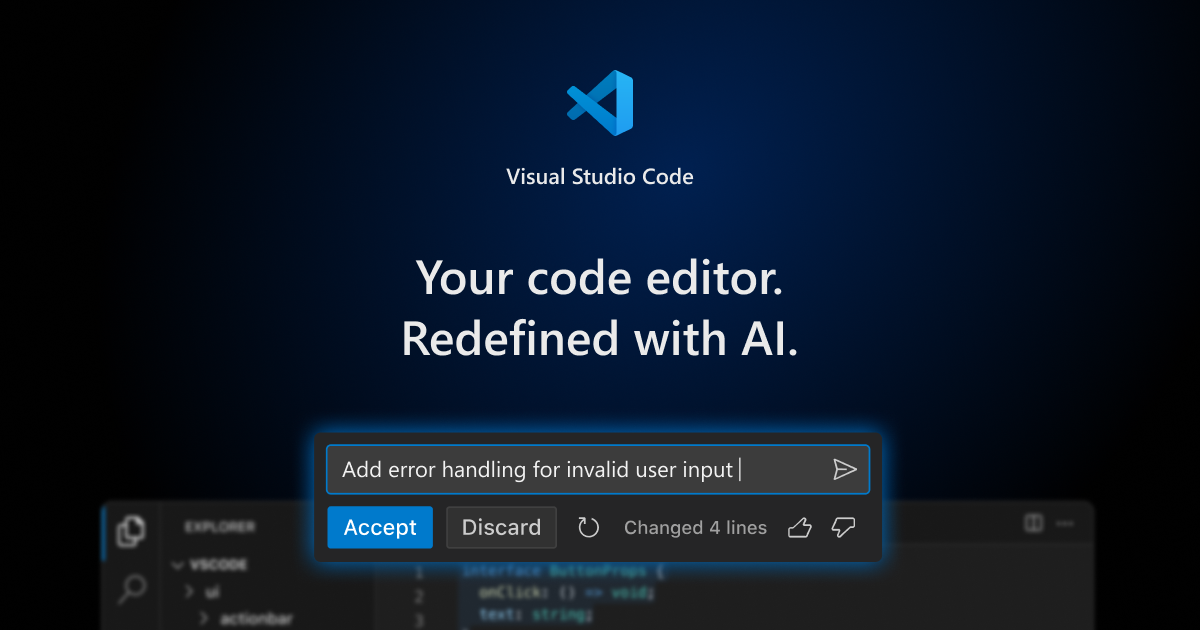
opengraph home

Visual Studio Code is a popular open-source code editor developed by Microsoft. It’s available for Windows, macOS, and Linux and supports various programming languages, including C++, C#, CSS, Dart, Dockerfile, F#, Go, HTML, Java, JavaScript, JSON, Julia, Less, Markdown, PHP, PowerShell, Python, R, Ruby, Rust, SCSS, T-SQL, TypeScript, and more. With a sleek interface, powerful debugging tools, and an extensive library of extensions, Visual Studio Code is an excellent choice for web developers of all skill levels.

One of the key features of Visual Studio Code is its extension system, which allows developers to customize their development environment with a wide range of plugins and extensions. This includes tools for debugging, linting, testing, and integrating with external services and frameworks. VS Code also has built-in support for Git, allowing developers to manage their source code easily.

VS Code has a user-friendly interface and a range of productivity-enhancing features, such as IntelliSense (a code completion feature that provides context-aware suggestions), a powerful search and replace function and multiple cursor support. It also features a built-in terminal, allowing developers to run commands and scripts without leaving the editor.

Overall, Visual Studio Code is a powerful and versatile code editor that provides developers with a customizable and streamlined workflow for their coding projects.

2. Sublime Text

Sublime Text is a popular cross-platform code editor developers widely use to write, edit, and manage code. It is known for its powerful and flexible interface and support for many programming languages.

Sublime Text offers a variety of features that help developers to streamline their workflow and be more productive. These include syntax highlighting, code completion, multiple cursors, and a powerful search and replace function. Sublime Text also has an extensive library of plugins and extensions, allowing developers to customize their editor to suit their needs.

One of the key features of Sublime Text is its performance. It is known for its speed and responsiveness, even when working with large files or complex codebases. This makes it a popular choice for developers working with large-scale projects.

Sublime Text is available for free, but it also offers a paid version with additional features and support. Overall, Sublime Text is a powerful and versatile code editor that provides developers with a flexible and customizable environment for their coding projects.

3. Atom

Atom screenshot v1.41.0

Atom is a free and open-source cross-platform code editor developed by GitHub. It is designed to be highly customizable and extensible, and it offers a range of features to help developers write and manage their code.

One of the key features of Atom is its modular design, which allows developers to customize their editor by installing packages and themes. These packages can provide functionality such as syntax highlighting, autocompletion, debugging, and integration with external tools and services.

Atom also includes a powerful search and replace function, multiple cursors, and a user-friendly interface that makes navigating and editing code easy. It also offers Git integration, allowing developers to manage their source code from within the editor.

Atom is built on web technologies, such as C, C++, C#, COBOL, CSS, CoffeeScript, Go, HTML, Java, JavaScript, JSON, Perl, PHP, Ruby, Scala, SQL, etc. which makes it highly flexible and customizable. It is also highly extensible, and developers can create their packages and themes to customize the editor to their liking.

Overall, Atom is a powerful and versatile code editor that provides developers with a flexible and customizable environment for their coding projects.

4. Brackets
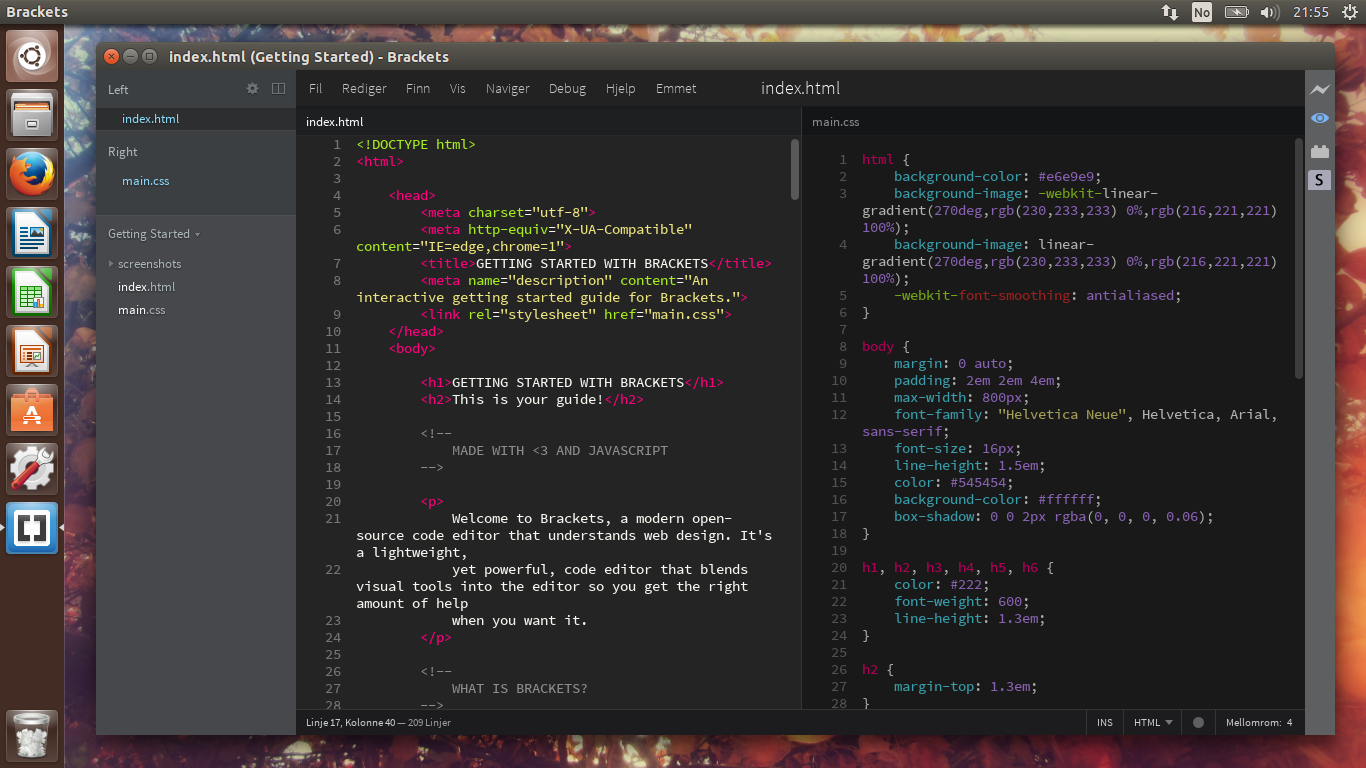
Brackets 1.1

Brackets is a free and open-source code editor developed by Adobe Systems. It is designed specifically for web development and offers a range of features to help developers write, edit, and manage their code.

One of the key features of Brackets is its live preview function, which allows developers to see changes to their code in real time as they make them. This can be especially useful for front-end development, as it allows developers to see how their code will look in the browser without switching back and forth between their editor and their browser.

Brackets include various other features, such as syntax highlighting, code completion, and a user-friendly interface. It also supports multiple programming languages, including C++, C, VBScript, Java, JavaScript, HTML, Python, Perl, Ruby, etc.

Brackets is highly extensible, and developers can install plugins to add additional functionality to the editor. These plugins can provide functionality such as linting, autocompletion, and integration with external tools and services.

Brackets is a powerful and versatile code editor providing web developers with a streamlined and efficient environment for their coding projects.

5. Notepad++

Notepad plus plus 7 5 1

Notepad++ is a free and open-source text editor for Windows. It is designed to be a lightweight and fast alternative to traditional text editors, with various features to help developers write and edit code.

Notepad++ offers syntax highlighting for various programming languages, including C, C++, Java, JavaScript, HTML, CSS, and others. It also includes code folding, auto-completion, and a powerful search and replace function.

Notepad++ is highly customizable, and developers can install plugins to add additional functionality to the editor. These plugins can provide functionality like linting, debugging, and integration with external tools and services.

One of the key features of Notepad++ is its speed and efficiency. It is designed to be lightweight and fast, with a low memory footprint, which makes it a popular choice for developers who need a text editor that can handle large files or complex codebases.

6. Bluefish

Bluefish editor editng an html page

Bluefish is a free and open-source code editor designed for web developers. It offers a range of features to help developers write, edit, and manage their code, including syntax highlighting, autocompletion, and a user-friendly interface.

One of the key features of Bluefish is its support for a wide range of programming languages, including HTML, XHTML, CSS, XML, PHP, C, C++, JavaScript, Java, Go, Vala, Ada, D, SQL, Perl, ColdFusion, JSP, Python, Ruby, and shell and many others. This makes it a popular choice for developers who work with a variety of programming languages and need a single editor that can handle them all.

Bluefish also includes various other features, such as code folding, multiple cursors, and a powerful search and replace function. It also integrates with external tools and services, such as version control systems and web browsers.

Bluefish is highly customizable, and developers can install plugins to add additional functionality to the editor. These plugins can provide functionality such as debugging, linting, and integration with external tools and services.

Overall, Bluefish is a powerful and versatile code editor that provides web developers with various features to help them write and edit code efficiently and effectively.

7. Code::Blocks

codeblocks

Code::Blocks is a free, open-source, cross-platform integrated development environment (IDE) designed for C, C++, and Fortran development. It provides a range of features to help developers write, debug, and manage their code.

Code::Blocks offers a user-friendly interface with various features, including syntax highlighting, code folding, and a powerful search and replace function. It also includes a debugger to help developers find and fix errors in their code.

One of the key features of Code::Blocks is its support for a wide range of compilers, including GCC, Clang, and Visual C++. This allows developers to choose the compiler that best suits their needs and ensures that their code is compatible with multiple platforms.

Code::Blocks is highly customizable, and developers can install plugins to add additional functionality to the IDE. These plugins can provide functionality such as linting, autocompletion, and integration with external tools and services.

Overall, Code::Blocks is a powerful and versatile IDE that provides developers with various features to help them write and manage their code efficiently and effectively. It is especially popular among C and C++ developers who require a flexible and customizable development environment.

8. Eclipse

1200px Eclipse33 Ubuntu

Eclipse is a free and open-source integrated development environment (IDE) designed for Java development, although it also supports many other programming languages. It provides a range of features to help developers write, debug, and manage their code.

Eclipse offers a user-friendly interface with various features, including syntax highlighting, code completion, and a powerful search and replace function. It also includes a debugger to help developers find and fix errors in their code.

One of the key features of Eclipse is its support for a wide range of plugins, which can add additional functionality to the IDE. These plugins can provide functionality such as linting, autocompletion, and integration with external tools and services.

Eclipse is highly customizable, and developers can create plugins or modify existing ones to suit their needs. This flexibility makes Eclipse popular among Java developers requiring a highly customizable and extensible development environment.

Overall, Eclipse is a powerful and versatile IDE with various features to help developers write and manage their code efficiently and effectively. Its support for a wide range of programming languages and its extensive plugin system makes it a popular choice for developers of all experience levels.

9. Aptana Studio

Aptana Studio Screenshot

Aptana Studio is a free and open-source integrated development environment (IDE) designed for web application development. It provides a range of features to help developers write, debug, and manage their code.

Aptana Studio offers a user-friendly interface with various features, including syntax highlighting, code completion, and a powerful search and replace function. It also includes a debugger to help developers find and fix errors in their code.

One of the key features of Aptana Studio is its support for a wide range of web technologies, including HTML, CSS, JavaScript, Ruby, and Python. This makes it a popular choice for web developers who work with multiple technologies and need a single IDE to handle them all.

Aptana Studio is highly customizable, and developers can install plugins to add additional functionality to the IDE. These plugins can provide functionality such as linting, autocompletion, and integration with external tools and services.

Overall, Aptana Studio is a powerful and versatile IDE that provides web developers with various features to help them write and manage their code efficiently and effectively. Its support for a wide range of web technologies and its extensive plugin system makes it a popular choice for developers of all experience levels.

10. CodeLite

CodeLite 5.1

CodeLite is a free, open-source, cross-platform integrated development environment (IDE) designed for C, C++, PHP, and JavaScript (Node. js) development. It provides a range of features to help developers write, debug, and manage their code.

CodeLite offers a user-friendly interface with various features, including syntax highlighting, code completion, and a powerful search and replace function. It also includes a debugger to help developers find and fix errors in their code.

One of the key features of CodeLite is its support for a wide range of compilers, including GCC, Clang, and Visual C++. This allows developers to choose the compiler that best suits their needs and ensures that their code is compatible with multiple platforms.

CodeLite is highly customizable, and developers can install plugins to add additional functionality to the IDE. These plugins can provide functionality such as linting, autocompletion, and integration with external tools and services.

Overall, CodeLite is a powerful and versatile IDE that provides developers with various features to help them write and manage their code efficiently and effectively. It is especially popular among C and C++ developers who require a flexible and customizable development environment.

Conclusion

In conclusion, plenty of great cross-platform code editors are available for web developers. Whether you’re looking for a lightweight editor or a powerful IDE, there’s a code editor out there that will suit your needs. Your best code editor will depend on your needs and preferences.


Himalayan Bank Payment Gateway Integration Service

Webtech Nepal provides Himalayan Bank Payment Gateway Integration Service in Nepal. To start HBL payment gateway integration on your website, you must understand what a payment gateway is. A payment gateway is a technology that enables online payments to be made through a website or mobile app. It acts as a secure intermediary between the customer’s bank and merchant accounts, ensuring the transaction is safe and secure. The Himalayan Bank Payment Gateway integration service allows businesses to integrate their websites or mobile apps with the bank’s payment gateway, enabling them to accept online customer payments.

What is Himalayan Bank?

Himalayan Bank, one of Nepal’s leading commercial banks, offers its customers a range of innovative banking solutions. One of the bank’s most notable offerings is its payment gateway integration service, which enables businesses to accept payments online securely and efficiently. In this article, we will look closer at the Himalayan Bank payment gateway integration service, its features, benefits, and how it can help businesses in Nepal.

Features & Benefits of HBL Merchant Payment Gateway Integration

The bank uses industry-standard encryption technologies and security protocols to ensure that all transactions are safe and secure. Businesses and customers can be assured that their financial data is protected from unauthorized access and fraud.

Another benefit of the HBL Merchant Payment Gateway Integration service is its ease of use. The service is designed to be simple and user-friendly, making it easy for businesses to integrate it with their websites or mobile apps. The bank provides detailed documentation and support to ensure companies can set up and use the service without the hassle.

In addition to its security and ease of use, the Himalayan Bank payment gateway integration service also offers a range of features that can help businesses to manage their online payments more efficiently. Some of these features include:

1. Multiple payment options: The payment gateway integration service supports multiple payment options, including credit cards, debit cards, and net banking. This means that businesses can offer their customers various payment options, making it more convenient for them to pay.

2. Real-time transaction updates: The service provides real-time transaction updates, enabling businesses to track the status of their transactions and receive instant notifications when a payment is made.

3. Automatic settlement: The payment gateway integration service automatically settles payments into the business’s account, reducing the need for manual intervention and making the payment process more efficient.

4. Customizable payment pages: Businesses can customize their payment pages to match their branding and design, providing a seamless and consistent user experience.

5. Multi-currency support: The service supports multiple currencies, enabling businesses to accept customer payments worldwide.

6. Fraud detection and prevention: The payment gateway integration service includes advanced fraud detection and prevention features, such as transaction monitoring and velocity checks, to protect businesses from fraudulent transactions.

Many businesses, including e-commerce websites, educational institutions, government agencies, and utility companies, can use the Himalayan Bank payment gateway integration service. It is beneficial for businesses that operate online or have many remote customers.

To use the payment gateway integration service, businesses must sign up for a merchant account with Himalayan Bank. The bank provides detailed instructions and support to help companies to set up their accounts and integrate the payment gateway with their websites or mobile apps. Once the integration is complete, businesses can start accepting online payments from their customers.

Security & Fraud Prevention Measures

The Himalayan Bank Payment Gateway Integration Service is designed to be a safe and secure platform for businesses to accept online payments. The bank has implemented security and fraud prevention measures to protect businesses and customers from fraudulent transactions. Here are some of the key security and fraud prevention measures implemented by Himalayan Bank for its payment gateway integration service:

1. Encryption: Himalayan Bank uses industry-standard encryption technologies to ensure that all transactions through its payment gateway are secure. The bank uses 256-bit SSL encryption, the same level of encryption banks use for online banking.

2. PCI DSS Compliance: Himalayan Bank is compliant with the Payment Card Industry Data Security Standard (PCI DSS), which is a set of security standards designed to ensure that all companies that accept, process, store, or transmit credit card information maintain a secure environment. This compliance ensures that the bank meets the highest security standards when processing credit card transactions.

3. Fraud Detection and Prevention: The payment gateway integration service has advanced fraud detection and prevention features to protect businesses from fraudulent transactions. The system includes transaction monitoring and velocity checks to detect unusual transaction patterns and flag them for review.

4. CVV Verification: The payment gateway integration service requires customers to enter the Card Verification Value (CVV) number when making a payment. This helps to prevent fraudulent transactions as the CVV number is only available on the physical credit card and not stored in the merchant’s database.

Overall, the Himalayan Bank Payment Gateway Integration Service has implemented several security and fraud prevention measures to protect businesses and their customers from fraudulent activities. The bank has taken all necessary steps to ensure that the payment gateway is secure and meets the highest standards of security in the industry.

Customer Support

The cost and pricing model for the Himalayan Bank Payment Gateway Integration Service may vary depending on the business’s specific requirements. Here are some factors that may affect the cost and pricing of the service:

1. Transaction Volume: The cost of the payment gateway integration service may depend on the number of transactions processed through the platform. Generally, businesses with a high transaction volume may be eligible for volume-based discounts.

2. Customization: The service cost may increase if a business requires customized features or integration with specific software or platforms.

3. Setup and Integration: The cost of configuration and integration may also vary depending on the complexity of the business requirements. The bank may charge a one-time setup fee to cover the costs of integrating the payment gateway with the business’s website or mobile app.

4. Monthly Fees: The bank may charge a monthly fee to cover the maintenance and support costs of the payment gateway integration service.

5. Transaction Fees: The bank may charge a fee for each transaction processed through the payment gateway. The price may be a fixed percentage of the transaction amount or a fixed fee per transaction.

6. Cross-Border Transactions: If a business processes cross-border transactions, additional fees may be associated with currency conversion and international transaction fees.

Businesses interested in the Himalayan Bank Payment Gateway Integration Service are recommended to contact the bank directly to discuss their specific requirements and obtain a customized pricing quote. The bank’s team will be able to provide a detailed breakdown of the costs and fees associated with the service based on the business’s needs.

Conclusion

In conclusion, the Himalayan Bank payment gateway integration service is an excellent solution for businesses that want to accept online payments securely and efficiently. Its advanced security features, ease of use, and range of features make it a popular choice among businesses in Nepal. This service allows companies to streamline payment processes, reduce manual intervention, and improve the overall customer experience.

Why you need your website redesign?

If you read this post, consider redesigning your website in 2023. Congratulations, you’re on the right track! Redesigning your website is crucial to staying relevant and competitive in today’s fast-paced digital world. This blog post will explore why you need a website redesign in 2023 and how it can benefit your business.

The digital world is constantly evolving, and keeping up with these changes is vital to the success of your online presence. If your website was updated a while ago, it’s time to consider a redesign. A website redesign is not just about making your site look better; it’s about improving the user experience, increasing conversions, and keeping up with the latest design trends and technologies.

Here are some reasons why you need to redesign your website in 2023:

1. Your website looks outdated

In today’s digital age, a website that needs to be updated can harm your business. Your website is often the first point of contact between your company and potential customers. If your website needs to be updated or more professional, it can create a negative first impression and turn potential customers away. A website redesign can help modernize your website and make it more visually appealing to your target audience.

2. Your website is not mobile-friendly

With more people accessing the internet from mobile devices, having a mobile-friendly website is no longer an option – it’s necessary. If your website is not optimized for mobile devices, you’re missing out on a large audience that could be accessing your website from their smartphones or tablets. A website redesign can help you create a responsive design that adapts to different screen sizes and provides an optimal user experience on all devices.

3. Your website is slow

Website speed is a critical factor in user experience and search engine optimization. If your website loads quickly, users will likely leave and look for alternatives. Moreover, search engines such as Google prioritize fast-loading websites in their search results, meaning that a slow website can also impact your search engine rankings. A website redesign can help you optimize your website’s speed and improve its performance.

4. Your website is not optimized for search engines

Search engine optimization (SEO) is a crucial aspect of digital marketing. You miss potential traffic and leads if your website is not optimized for search engines. A website redesign can help you create an SEO-friendly website that is optimized for relevant keywords, has a clear structure, and provides a positive user experience. Optimizing your website for search engines can increase your visibility and attract more organic traffic to your website.

5. Your website does not reflect your brand

Your website reflects your brand and should accurately represent your values, mission, and vision. If your website does not reflect your brand, it can create confusion and send mixed messages to your audience. A website redesign can help you create a website aligned with your brand identity and provide a cohesive experience across all touch points.

6. Your website is not user-friendly

If your website could be more challenging or confusing, it’s time for a redesign. A user-friendly website with clear calls to action and intuitive design is easy to navigate. A redesign can simplify your website, making it easier for users to find what they’re looking for and take the actions you want them to take.

7. Your website is not secure

If your website is insecure, it’s vulnerable to hacking and other cyber threats. In 2023, website security will be more critical than ever, mainly if you collect personal information from your users. A redesign can help improve your website’s security by ensuring it’s updated with the latest security standards and implementing secure protocols like SSL.

8. Your website is not converting visitors into customers

If your website needs to convert visitors into customers, it’s time to redesign. A website redesign can help improve the user experience, making finding what they’re looking for and taking the actions they want easier. This can lead to an increase in conversions and, ultimately, more business for you.

In conclusion, a website redesign is not just about improving your site; it’s about improving the user experience, increasing conversions, and keeping up with the latest design trends and technologies. Suppose your website looks outdated, needs to be more responsive, is slow, is not user-friendly, is not optimized for search engines, is not secure, or is not converting visitors into customers. In that case, it’s time for a redesign. In 2023, website design is going to continue to evolve.

Why every business needs a website?

In today’s world, where everything is becoming digital, people are more likely to search for products and services online rather than physically visiting a store. Therefore, having an online presence is essential for any business to reach its potential customers. No matter the size or nature of your business, having a website is necessary. It not only provides an online presence for your brand, but it also serves as a platform for communication, marketing, and sales. A website is a digital storefront accessible 24/7 from anywhere in the world. It provides a platform to showcase your products and services, share your brand story and engage with your audience.

Moreover, having a website is cost-effective compared to traditional advertising methods such as print or TV ads. With the right SEO strategy, you can rank higher on search engines and drive traffic to your website without spending much money. You can also track user behavior using analytics tools and modify your website to improve user experience.

Here are some reasons why every business needs a website:

Establishes an Online Presence

A website is necessary if you want your business to be visible online. Nowadays, people search for products and services online, and if your business doesn’t have a website, you’re losing out on potential customers. By having a website, you can establish an online presence and reach a wider audience.

Builds Credibility

A website is the best way to build credibility and establish trust with potential customers. When people search for a product or service, they expect to find a website that provides information about the company, its products, and its services. A well-designed, informative website and easy to navigate can give potential customers the confidence to do business with you.

Provides a Platform for Communication

A website provides a platform for communication between your business and your customers. It lets you provide information about your products and services, answer customer queries, and receive feedback. You can also use your website to provide customer support, which can help build trust and loyalty with your customers.

Increases Sales

A website is an effective way to increase sales for your business. By providing a platform for online transactions, you can reach customers who are unable or unwilling to visit your physical store. Additionally, a website allows you to showcase your products and services, which can lead to increased sales.

Allows for Targeted Marketing

A website allows you to engage in targeted marketing. You can use tools like search engine optimization (SEO) and pay-per-click (PPC) advertising to reach your target audience. By targeting your marketing efforts, you can reach potential customers more likely to be interested in your products and services.

Provides Valuable Data

A website provides valuable data that can be used to improve your business. You can use analytics tools to track website traffic, customer behavior, and sales. This data can help you identify areas for improvement and make informed decisions about your business.

Keeps Your Business Competitive

In today’s digital age, having a website is essential to staying competitive. Your competitors are likely to have websites; if you don’t, you’re at a disadvantage. A website allows you to compete on a level playing field and reach potential customers who might otherwise choose your competitors.

Conclusion

In conclusion, every business needs a website. A website provides an online presence, builds credibility, provides a platform for communication, increases sales, allows for targeted marketing, provides valuable data, and keeps your business competitive. It allows you to establish credibility and build trust with your customers while enabling you to reach out beyond local markets. Creating an effective website design showcasing your brand values, products, or services can set you apart from competitors while increasing leads and sales opportunities.

What is the difference between UI and UX ?

User Interface (UI) and User Experience (UX) are two terms often used interchangeably, but they are not the same. Both are essential components of any product or software design but serve different purposes. In this blog post, we will explore the differences between UI and UX and how they complement each other.

What is User Interface (UI)?

User Interface (UI) refers to users’ graphical interface when using a product or software. It is the visual representation of the product or software, including icons, typography, menus, buttons, and other design elements that are used to navigate the product.

UI design serves the purpose of making the product or software visually appealing and easy to use. The UI designer strives to create an aesthetically pleasing and intuitive design while keeping in mind the product’s functionalities.

The main goal of UI design is to create a visual interface with that users can easily interact. This includes designing a layout that is easy to navigate, creating clear and concise labeling, and ensuring all the elements are responsive and functional.

What is User Experience (UX)?

User Experience (UX), on the other hand, refers to a user’s overall experience when using a product or software. It includes all aspects of the user’s interaction, including the UI design, ease of use, accessibility, and user satisfaction.

UX design serves the purpose of creating an experience that is beneficial for the user. The UX designer strives to make the product easy to use and navigate, aiming to create a seamless user experience.

The main goal of UX design is to create a user-centered design that meets the user’s needs, including making the product or software accessible, enjoyable, and user-friendly. This involves conducting user research, creating user personas, and designing interactions that meet the user’s needs.

Differences between UI and UX

Now that we have a basic understanding of what UI and UX are let’s dive into the differences between the two.

1. Focus

UI design focuses on the appearance and presentation of a product, while UX design focuses on the user’s overall experience when using the product. UI designers aim to create a visually appealing design that is easy to navigate, while UX designers aim to create a plan that offers a seamless experience for the user.

2. Role

UI design focuses on the visual aspects of the product, while UX design focuses on the user’s whole experience. UI designers work on buttons, menus, colors, and other visual components, while UX designers work on the entire user journey from start to finish.

3. Creativity vs. Functionality

UI design is often centered around creativity and aesthetics, while UX design centers on functionality and usability. UI designers focus on creating a visually pleasing design, while UX designers focus on creating a functional and intuitive design that meets the user’s needs.

4. Timeframe

UI design is often completed before UX design. UI designers often create a visual mockup of the product, which is then passed on to the UX designer to optimize it for usability and functionality. This means that UI design often comes first, followed by UX design.

5. Mindset

UI design is often more focused on the present, while UX design is focused on the future. UI design is centered around creating a design that looks good now, while UX design is focused on creating a design that will continue to meet the user’s needs in the future.

Conclusion

In conclusion, UI and UX are essential components of any product or software design, but they serve different purposes. UI focuses on the visual representation of the product, while UX focuses on the user’s overall experience. Both are important in ensuring a successful product or software, and they work together to create a design that meets the user’s needs.

UI design provides the product’s aesthetics, while UX design provides the functionality and usability of the product. They complement each other and are equally important in creating a design that users love. Understanding the differences between UI and UX is essential for creating a successful design.